Blog
Practise better, screen less.
Practical, honest guides for parents of primary-school kids — from the times-tables plan to how much app is really okay for learning.

11 October 2026 · 5 min read
Sofatutor alternative for primary school: the honest comparison
Sofatutor and Talentists solve different problems: a video-lesson subscription portal versus free, printable maths worksheets. Who needs which — without the marketing spin.
Read more →

19 September 2026 · 6 min read
My child just collects coins: rewards in learning apps
Coins, stars, streaks: many learning apps reward sticking around rather than understanding. What research says, how to spot it and what helps, without banning the app.
Read more →
9 August 2026 · 5 min read
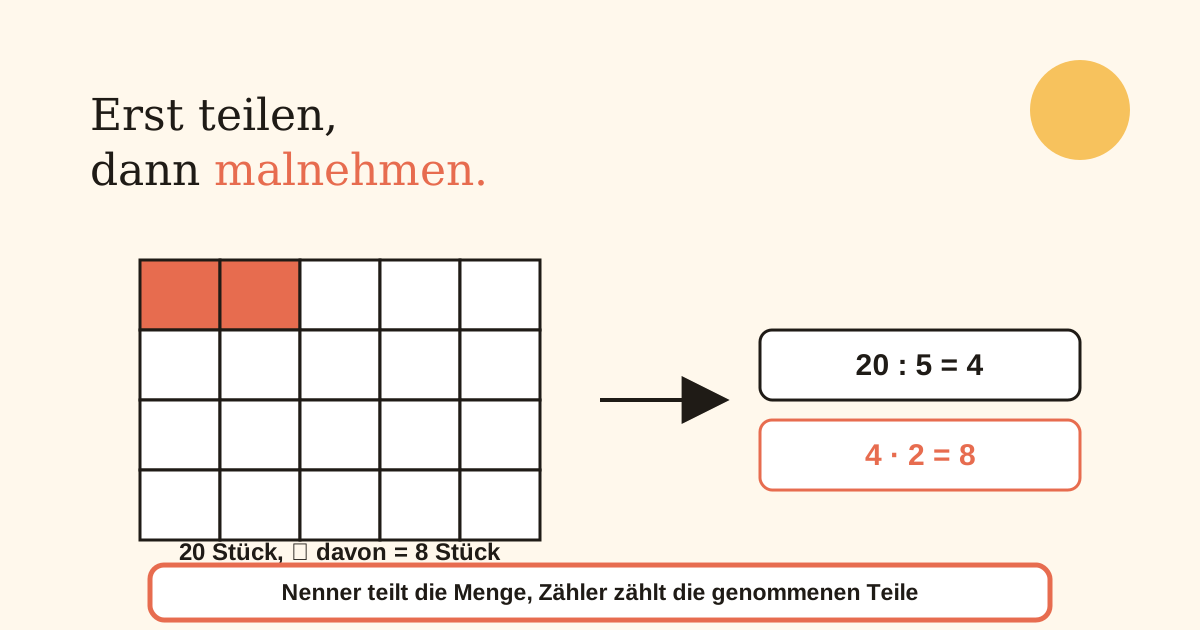
Finding a fraction of a quantity: ¾ of 60 minutes and beyond
¾ of an hour, ⅓ of a class, ⅖ of a chocolate bar — the moment a fraction meets a real quantity, it turns into a calculation. How your child works out a fraction of a quantity in two reliable steps.
Read more →
9 August 2026 · 5 min read
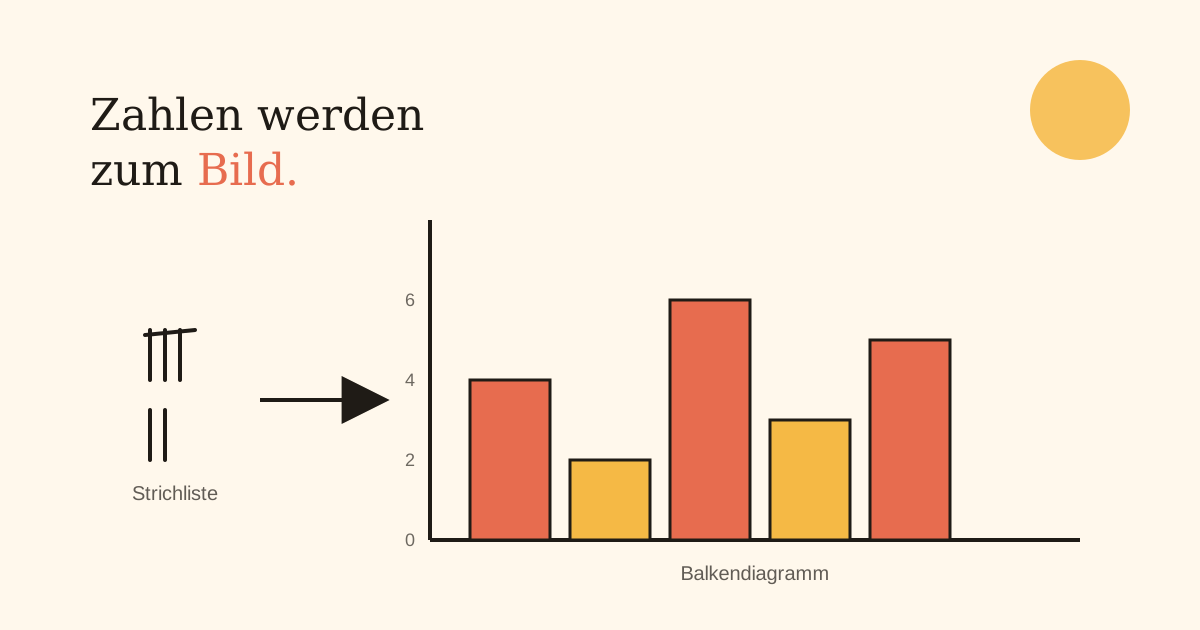
Building your own bar chart: turning raw numbers into a picture
Your child can already count with a tally chart — now it becomes a bar chart. How raw numbers turn into a picture you can compare at a glance, and what matters about axes and scale.
Read more →
9 August 2026 · 5 min read
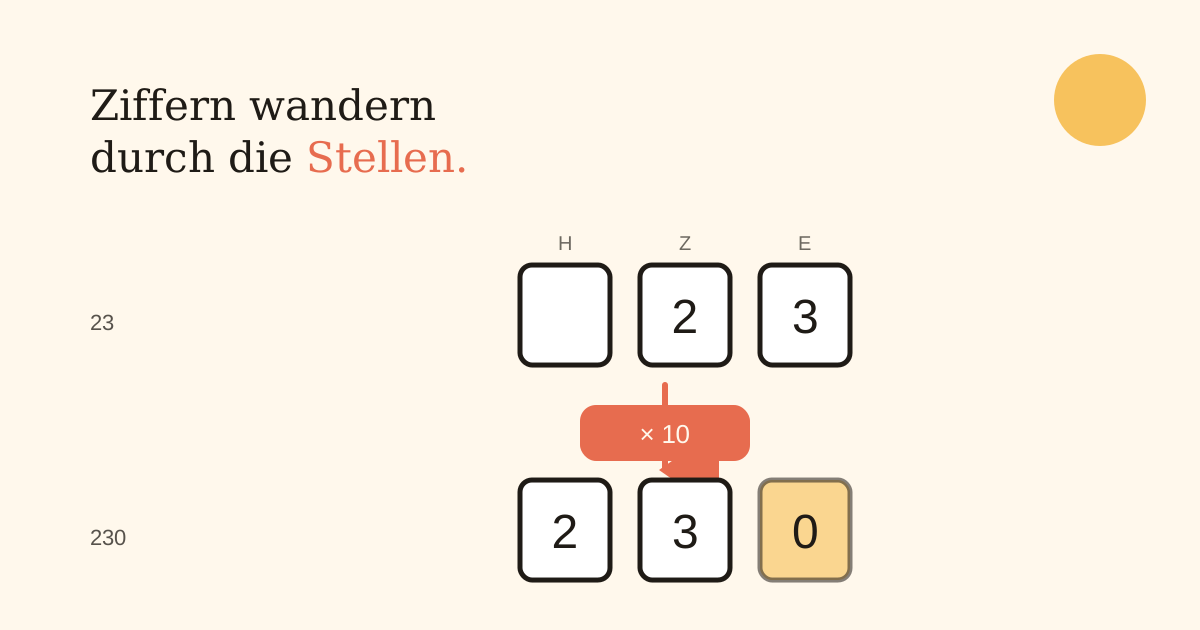
Multiplying and dividing by 10, 100, 1000: the place-value shortcut
‘Just add a zero’ only gets you as far as the first decimal. How your child learns what's really happening when multiplying and dividing by 10, 100 and 1000 — and why it's more than a trick.
Read more →
9 August 2026 · 5 min read
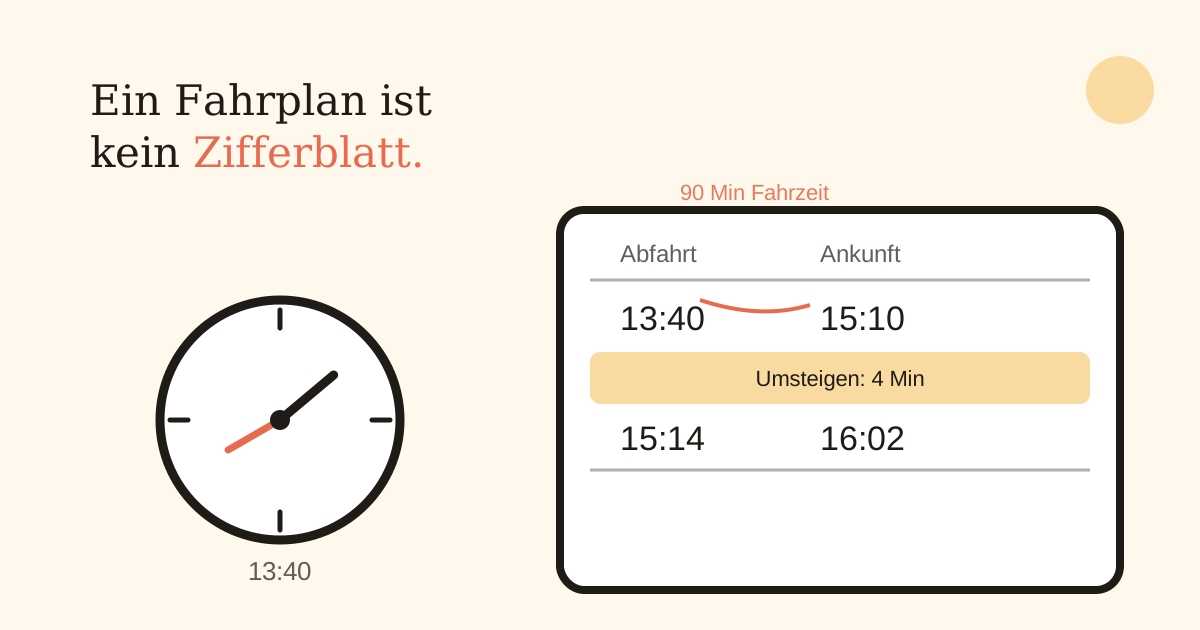
Reading a timetable: how your child really understands bus and train times
A timetable is more than reading a clock — departure, arrival, transfer time and 24-hour notation all show up at once. How your child learns to read a real timetable with confidence.
Read more →
9 August 2026 · 5 min read
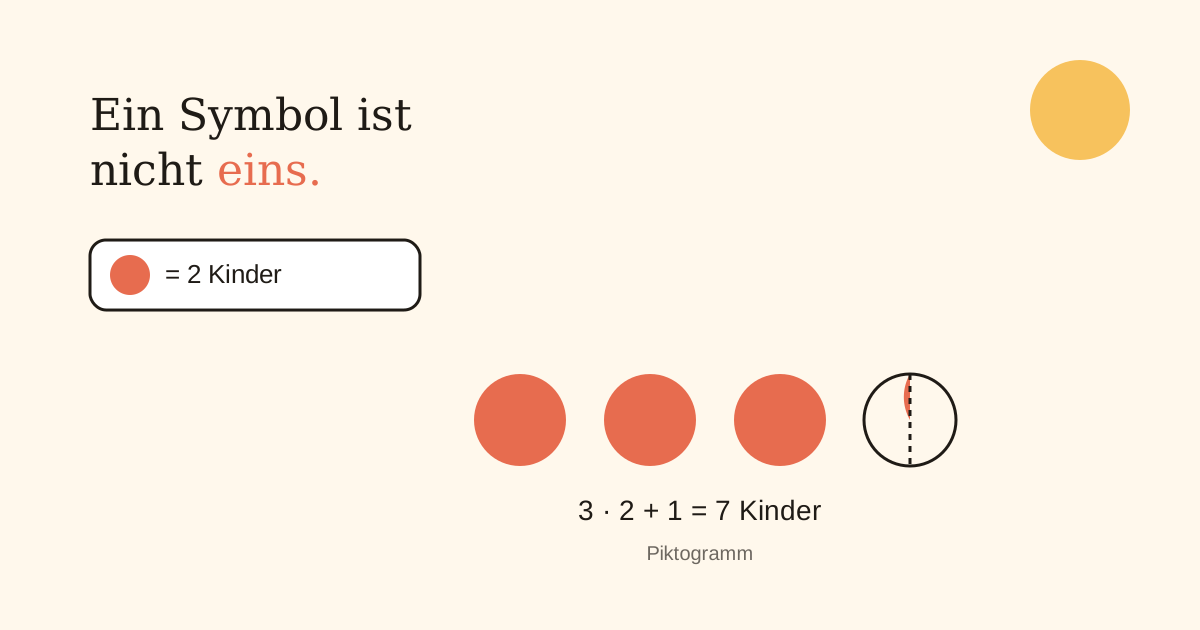
Reading pictograms: when one symbol doesn't mean one
An apple icon can stand for 2 children, a half icon for 1 — pictograms look childlike but demand multiplying and dividing. How your child learns to read the key first.
Read more →
9 August 2026 · 5 min read
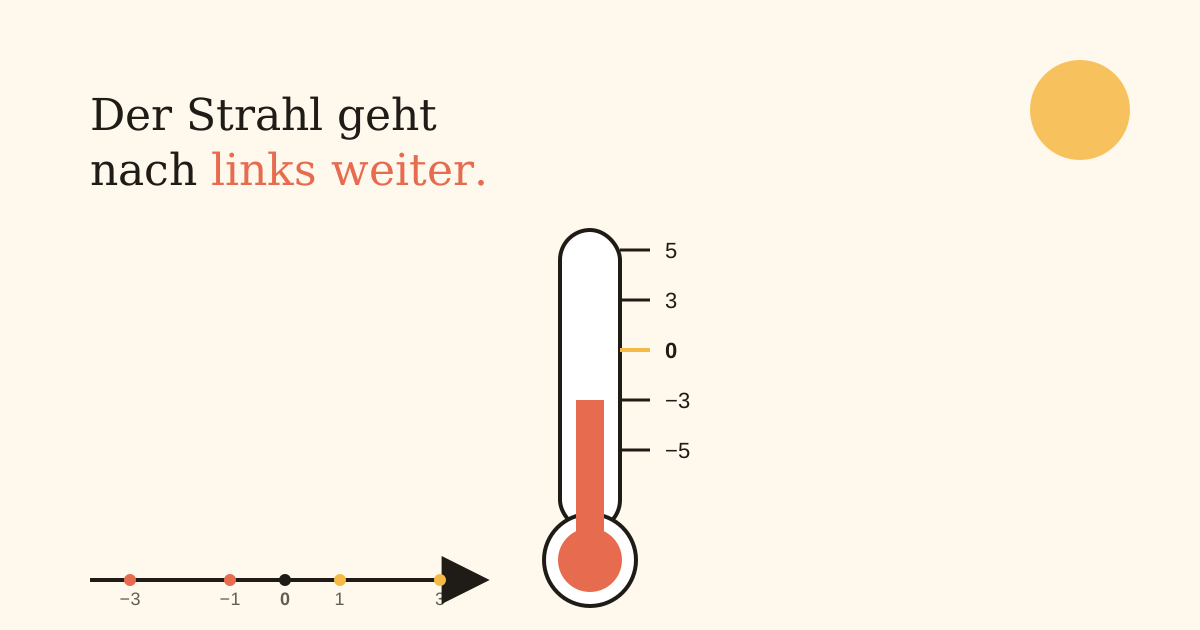
Understanding negative numbers: the number line keeps going left
Minus 3 degrees is colder than minus 1 degree, even though 3 is bigger than 1. How your child grasps negative numbers through the temperature scale — and why the number line already has everything it needs.
Read more →
9 August 2026 · 6 min read
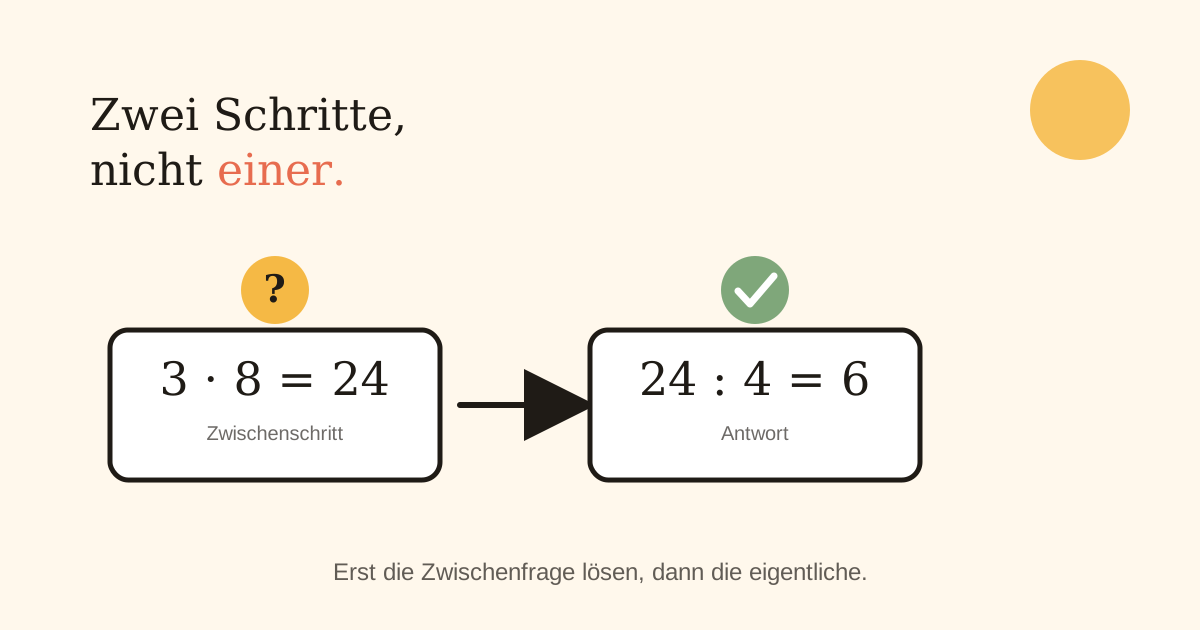
Two-step word problems: when one calculation isn't enough
Mum buys 3 packs of 8 biscuits and shares them among 4 children — two calculations, one question. Why two-step word problems catch many children out, and how to make the bridge between the steps visible.
Read more →
9 August 2026 · 5 min read
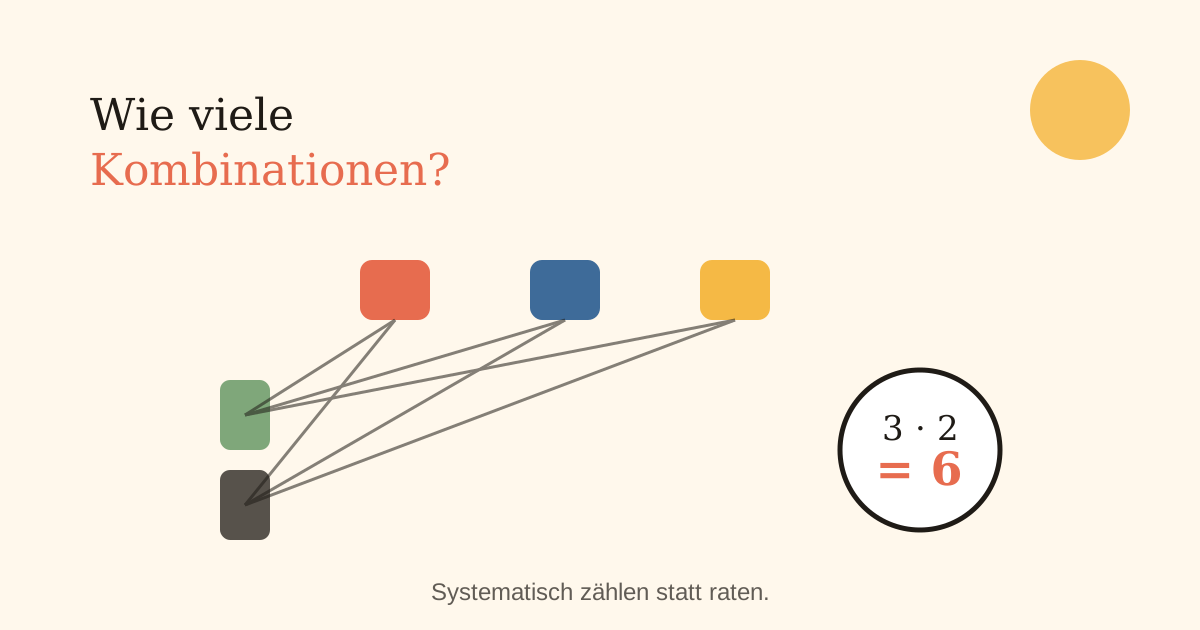
Combinatorics for primary schoolers: how many combinations are there really?
3 T-shirts and 2 pairs of trousers don't make 5 combinations — they make 6. Why children tend to add instead of multiply when counting possibilities, and how a systematic table makes every combination visible.
Read more →
8 August 2026 · 5 min read
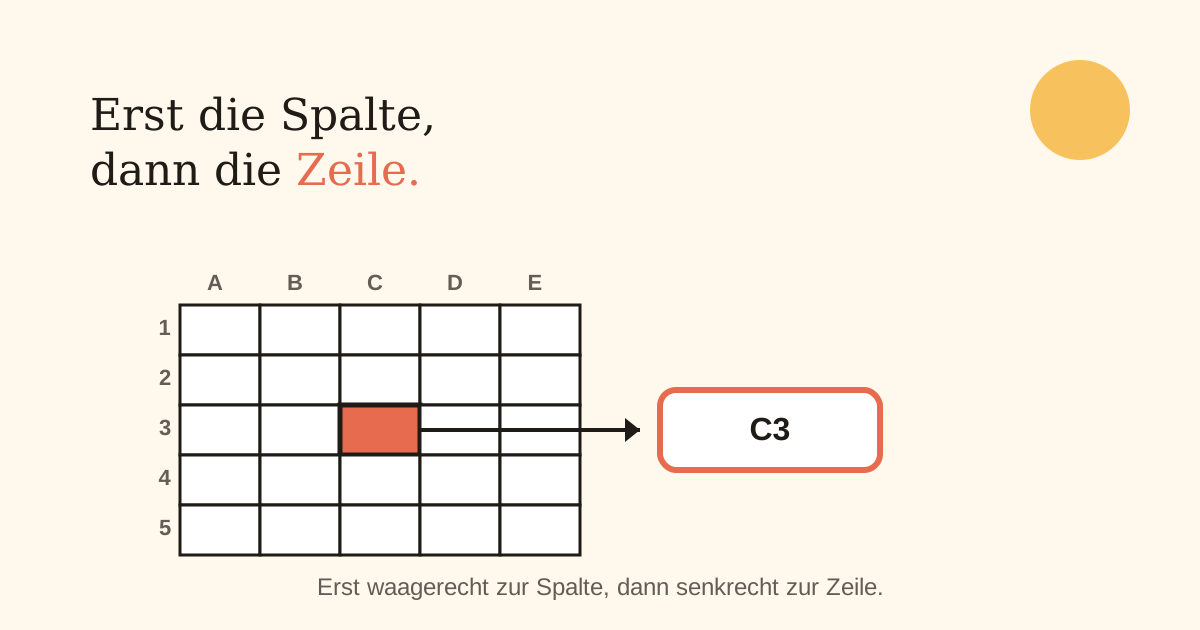
Reading a grid: finding positions with confidence
Row 5, seat C — at the cinema, that's second nature. Why reading a grid trips primary-school kids up anyway, and how the fixed column-then-row order becomes a habit.
Read more →
8 August 2026 · 5 min read
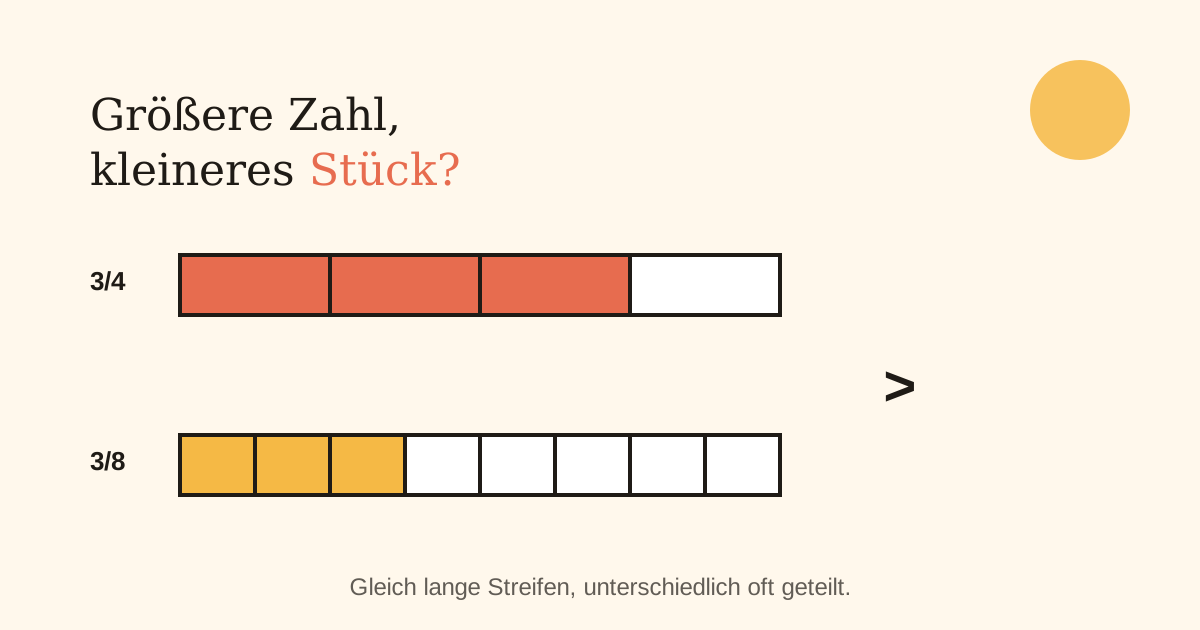
Comparing fractions: which one is bigger?
8 is more than 4 — but is an eighth really more than a quarter? Why the familiar "bigger number wins" rule doesn't hold for fractions, and the three cases your child should know.
Read more →
8 August 2026 · 5 min read
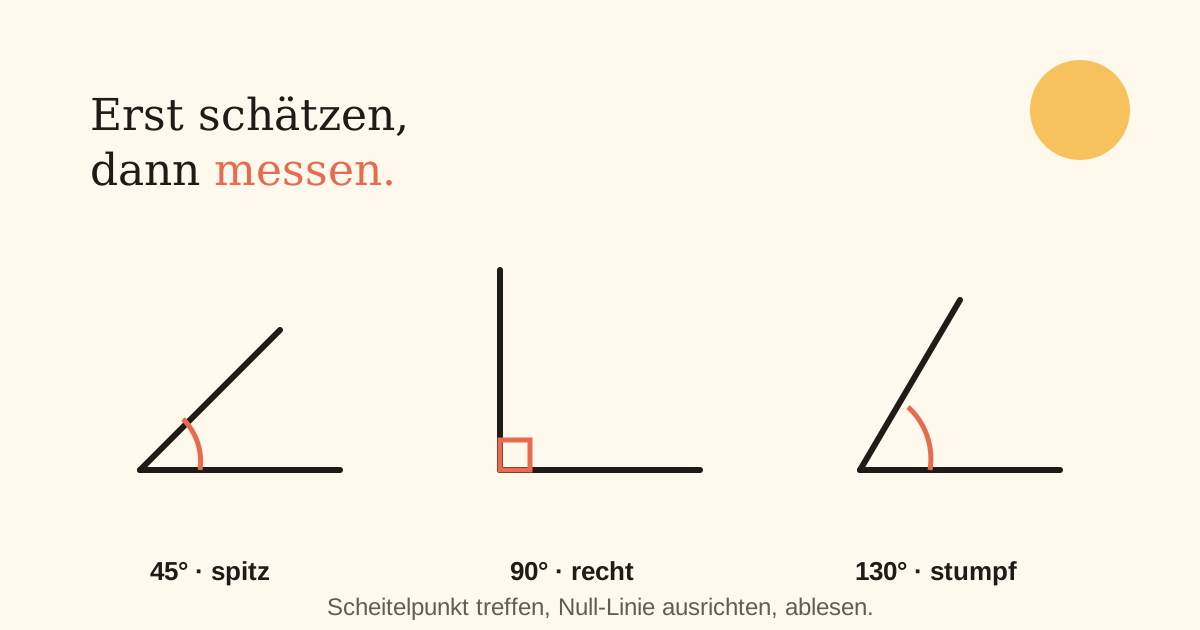
Recognizing and measuring angles: getting off to a solid start
Acute, right, obtuse, straight — and then lining up the protractor correctly. Why angles trip up grade 3 and 4 kids, and how your child learns to tell them apart and measure them with confidence.
Read more →
8 August 2026 · 5 min read
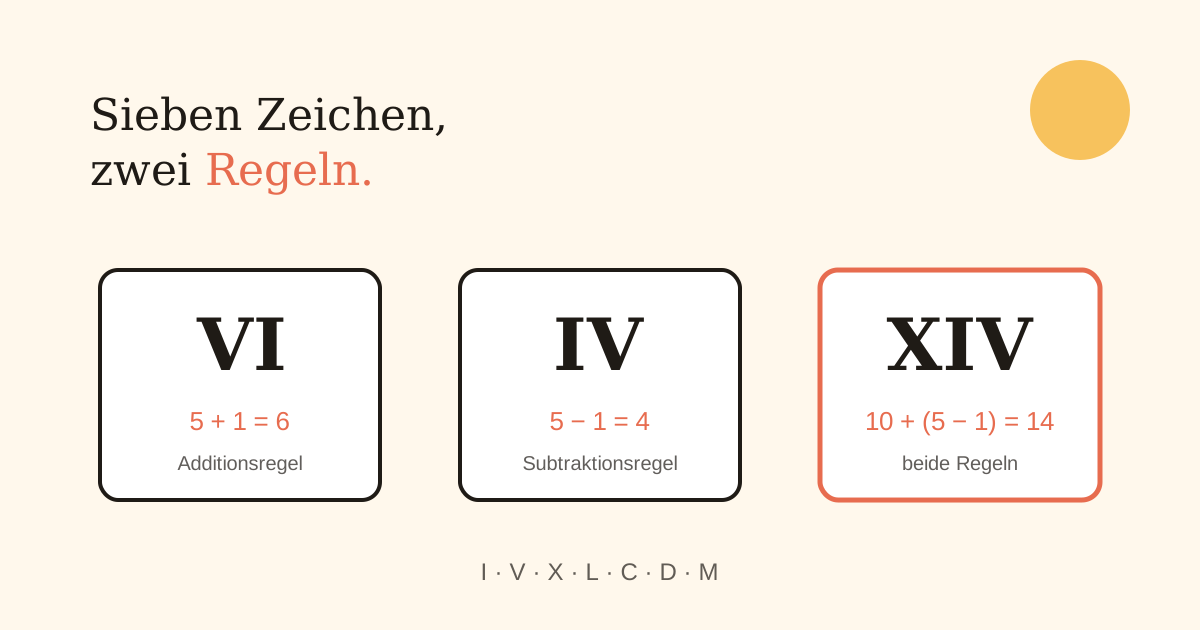
Roman numerals explained: how the Romans' counting system works
Clock faces, book chapters, movie credits — Roman numerals are everywhere once you start noticing them. How the seven-symbol system works, and the two rules your child needs to read and write it.
Read more →
8 August 2026 · 5 min read
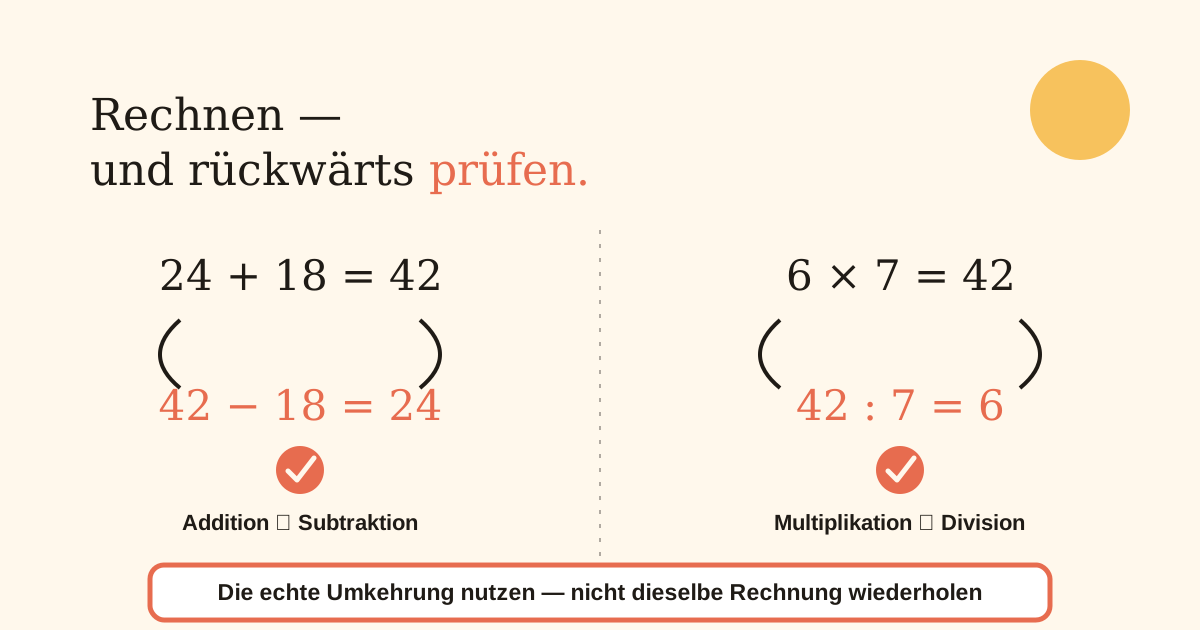
Inverse operations and checking your work: finding mistakes yourself
Addition can be checked with subtraction, multiplication with division — why checking your work is more than a tedious formality, and how your child can catch mistakes before they come back marked in red.
Read more →
8 August 2026 · 5 min read
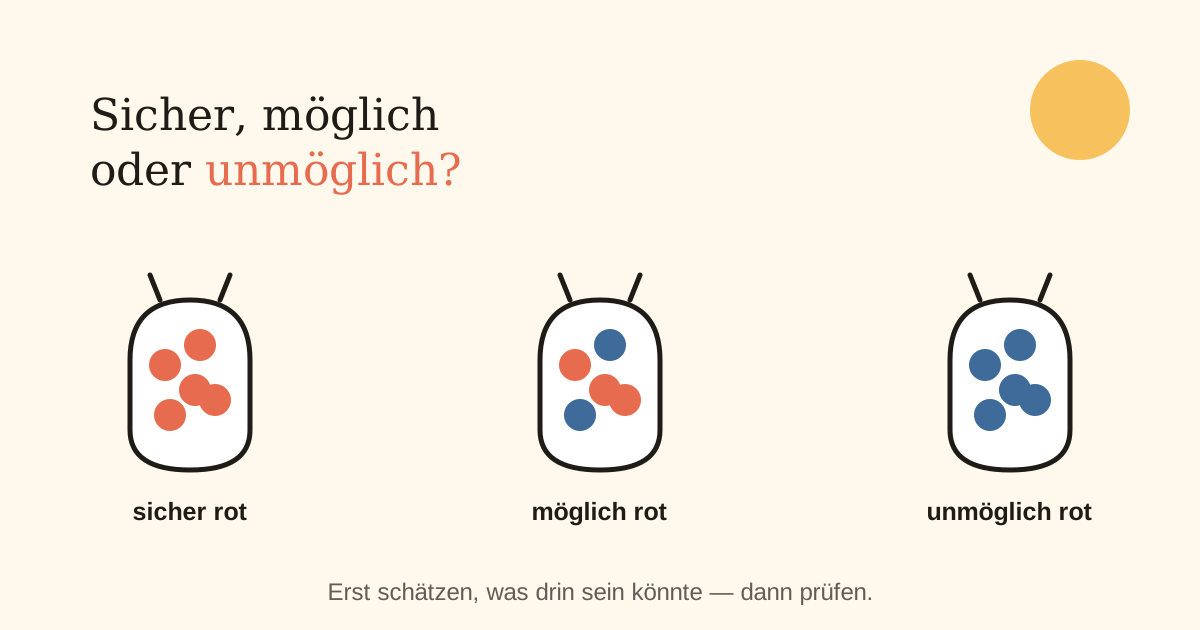
Chance and probability: certain, possible, or impossible?
Will the sun come out tomorrow? Are you guaranteed to roll a six? In primary school, probability doesn't start with percentages — it starts with three simple words, and they're easy to practise with a dice game at the kitchen table.
Read more →
8 August 2026 · 5 min read
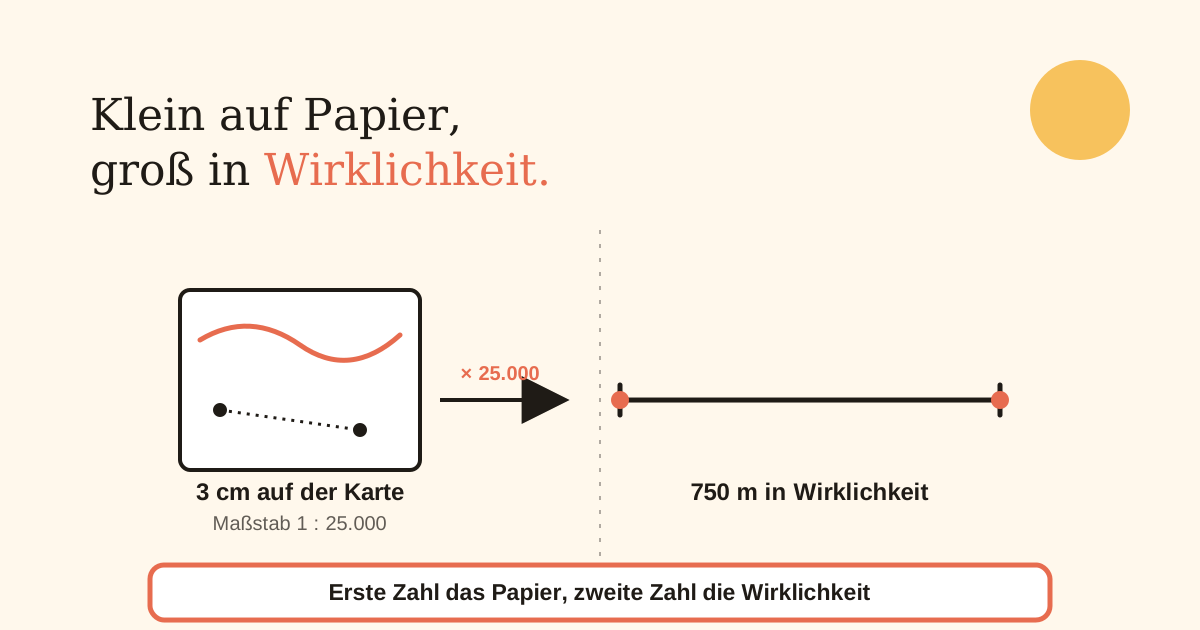
Reading map scale: how a map shrinks the real world
1:100 on a floor plan, 1:25,000 on a hiking map — scale tells you how much real-world distance fits into a single centimetre of paper. How your child reads it, and calculates in both directions.
Read more →
8 August 2026 · 5 min read
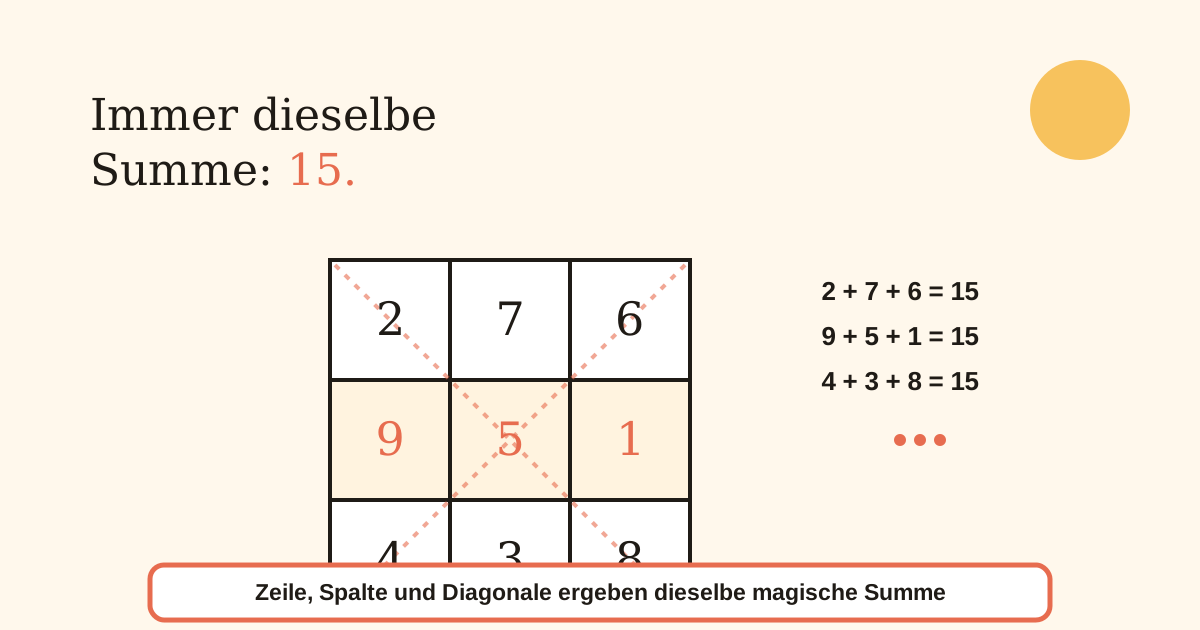
Solving magic squares: number puzzles with a system, not guesswork
Every row, column and diagonal adds up to the same total — magic squares look like a magic trick, but they're pure arithmetic logic. How your child cracks them with a system instead of trial and error.
Read more →
7 August 2026 · 4 min read
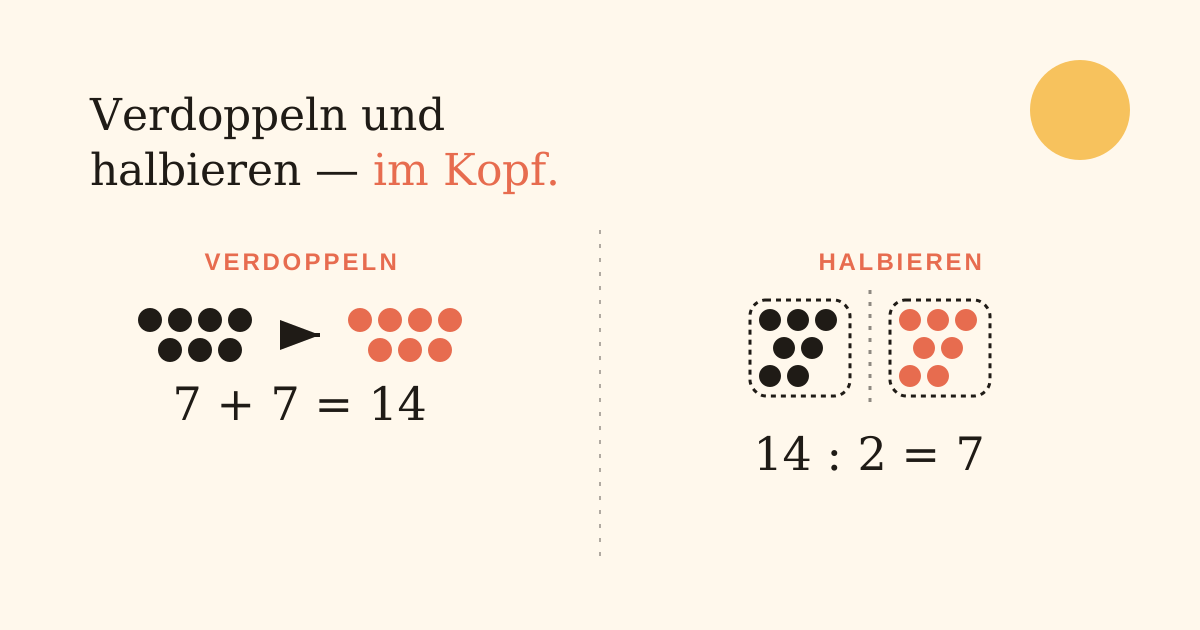
Doubling and halving: the mental-math shortcut kids underestimate
A child who knows 7 + 7 by heart has already solved 14 ÷ 2 too. Why this reverse-pair strategy is the key to bigger mental math — and where kids trip up doubling two-digit numbers.
Read more →
7 August 2026 · 5 min read
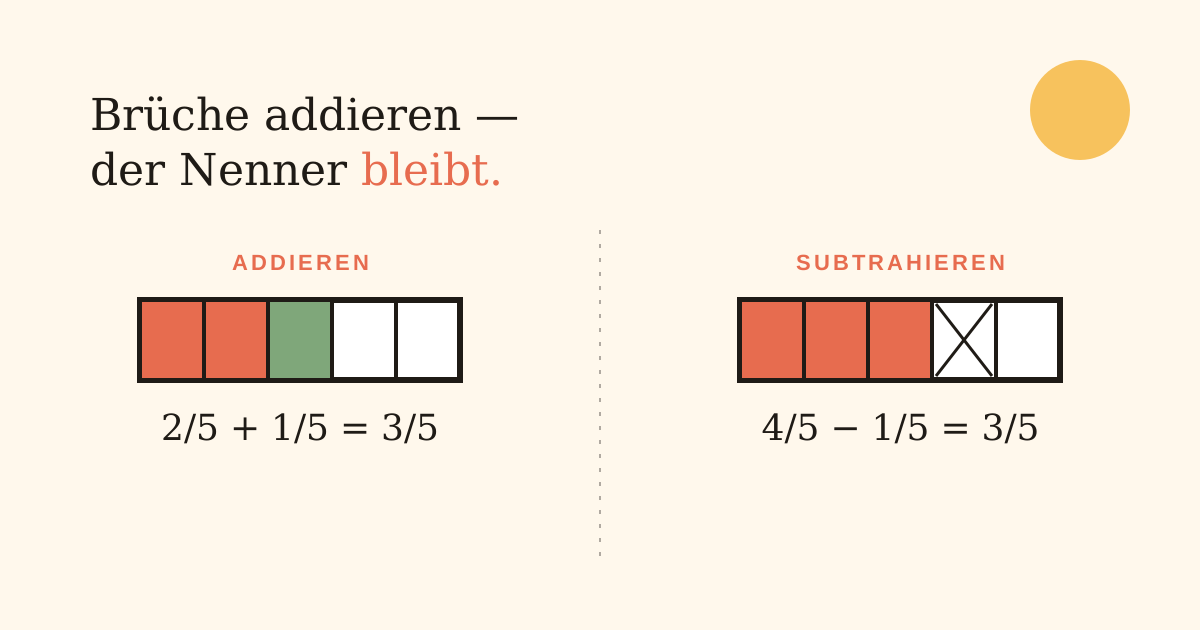
Adding and subtracting fractions: why the denominator stays put
2/5 + 1/5 looks like it should be 3/10, but it's 3/5. Why adding and subtracting fractions only touches the numerators — and what happens when the denominators don't match.
Read more →
7 August 2026 · 5 min read
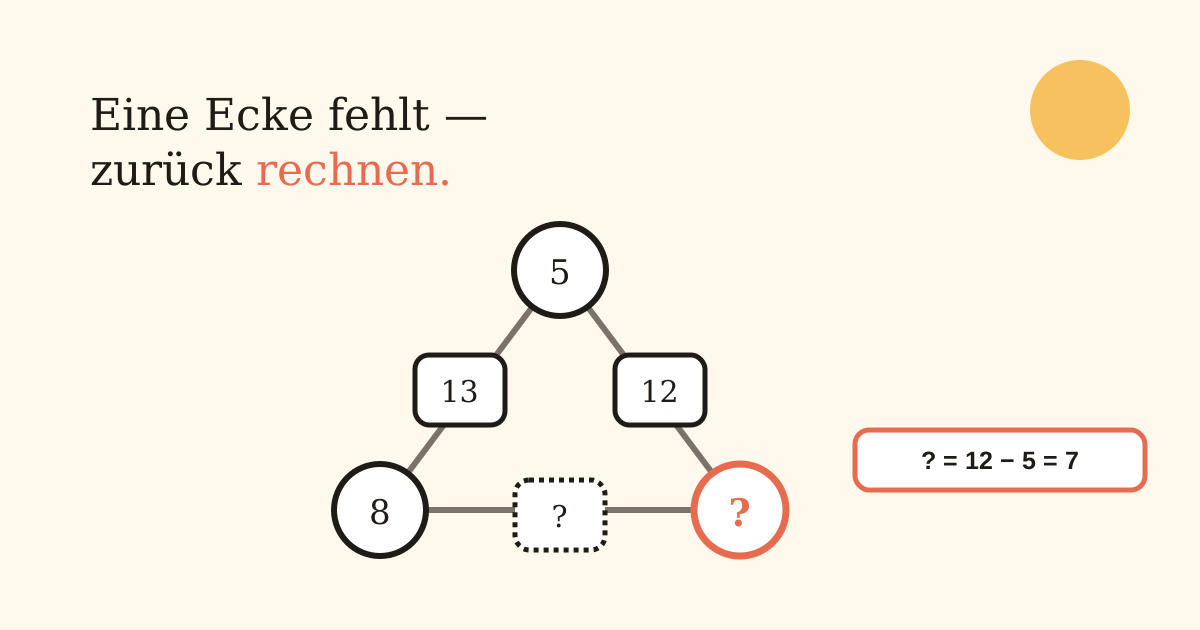
Solving number triangles: one missing corner, one reversal
Every box between two corner numbers in a number triangle is their sum. Once a corner is missing, only a reversal helps — and that's exactly the step that gets skipped.
Read more →
7 August 2026 · 5 min read
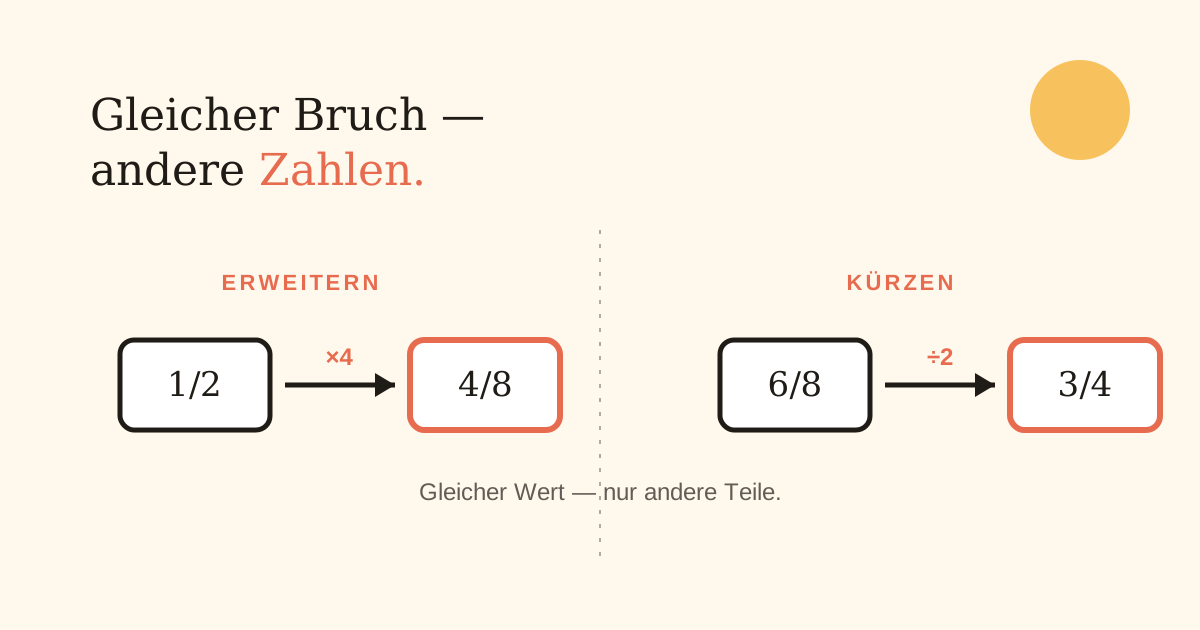
Simplifying and expanding fractions: same value, different numbers
1/2 and 4/8 are the same part of the whole, just named differently. How simplifying and expanding relate to each other — and why both only work with multiplying or dividing, never adding or subtracting.
Read more →
7 August 2026 · 5 min read
Converting units: same amount, different unit
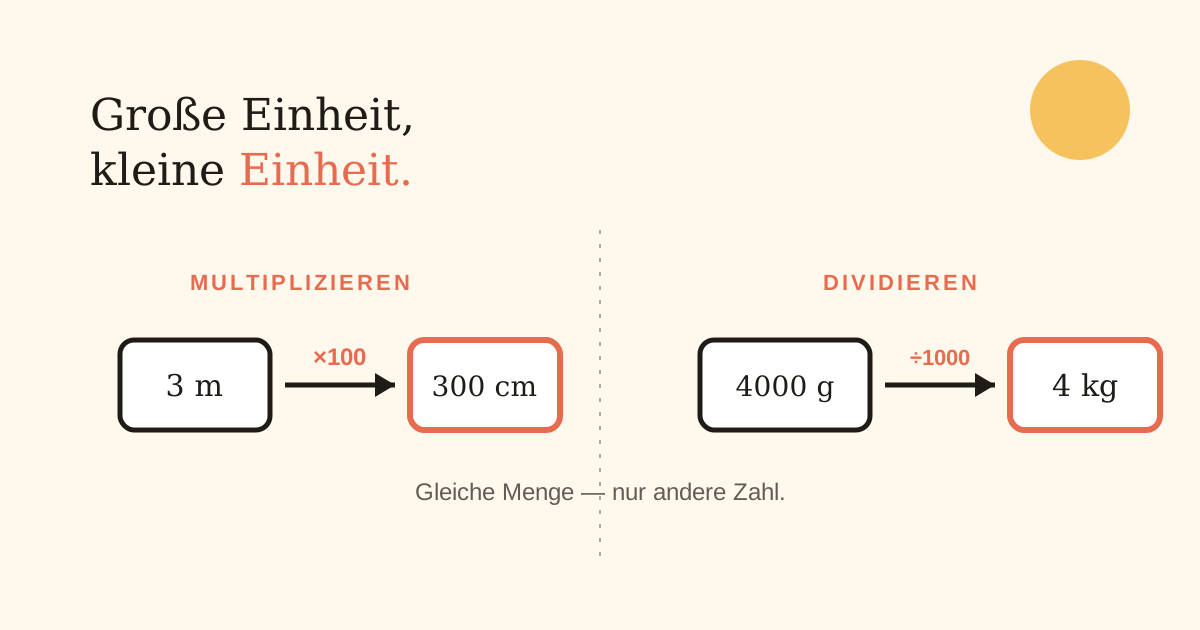
3 m is 300 cm, not 30 cm. Why converting units is just multiplying or dividing by 10, 100 or 1000 — and where kids get the wrong factor or the wrong direction.
Read more →
7 August 2026 · 5 min read
Recognising 3D shapes: cubes, cuboids, spheres and more
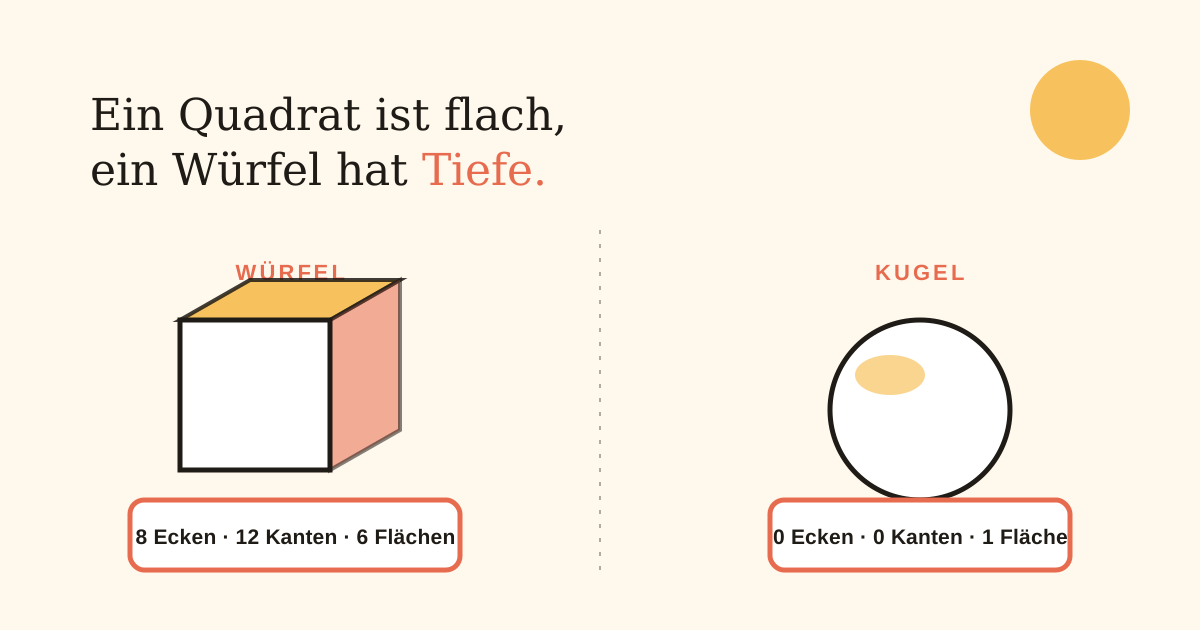
A square is flat, a cube has depth. How your child tells apart the six basic 3D shapes taught in primary school — and why counting corners, edges and faces is the most reliable way to do it.
Read more →
7 August 2026 · 5 min read
Calculating with a calendar: counting days, weeks and months
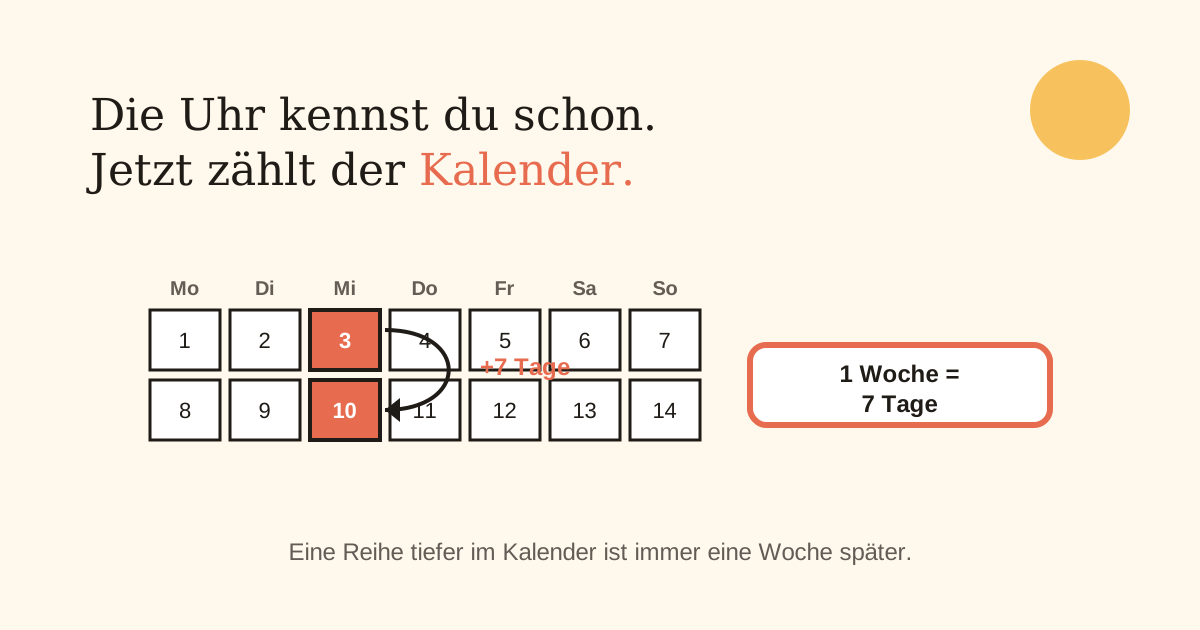
Your child can already work out 1:40pm to 3:10pm — but how many days is it from March 24th to April 2nd? Why calendar maths has its own pitfalls, and how the month lengths stick in memory.
Read more →
6 August 2026 · 5 min read
Solving number walls: why addition suddenly turns into subtraction
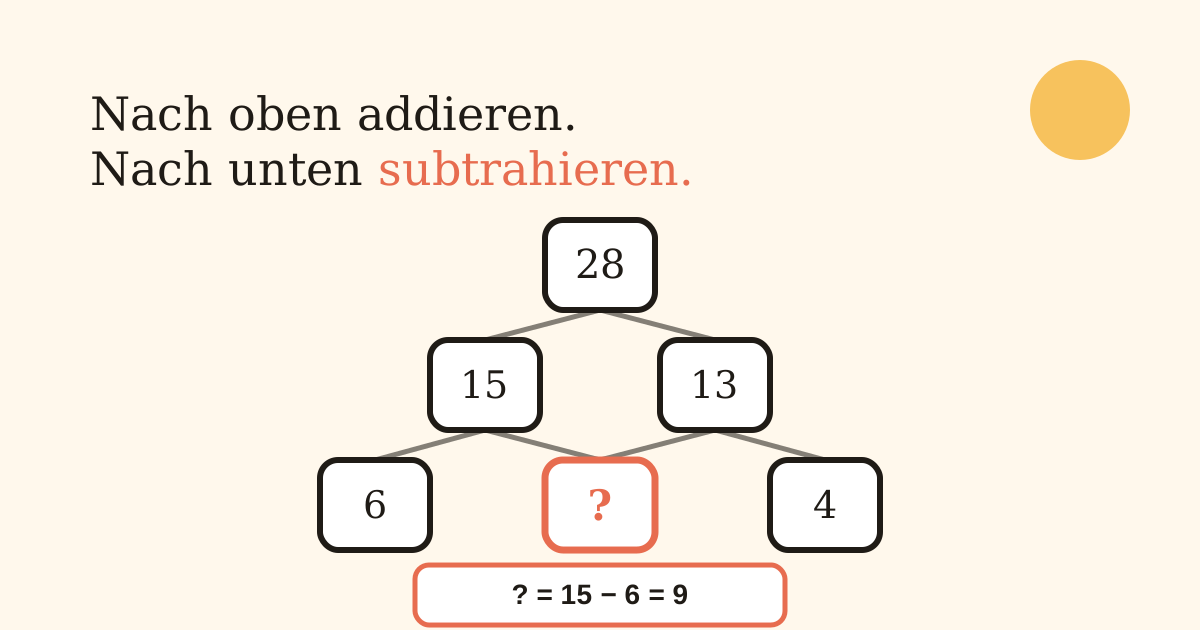
Every brick in a number wall is the sum of the two bricks below it — as long as the bottom row is fully known. Once a bottom brick is missing, addition alone won't get you there. How the switch to subtraction clicks in minutes.
Read more →
6 August 2026 · 4 min read
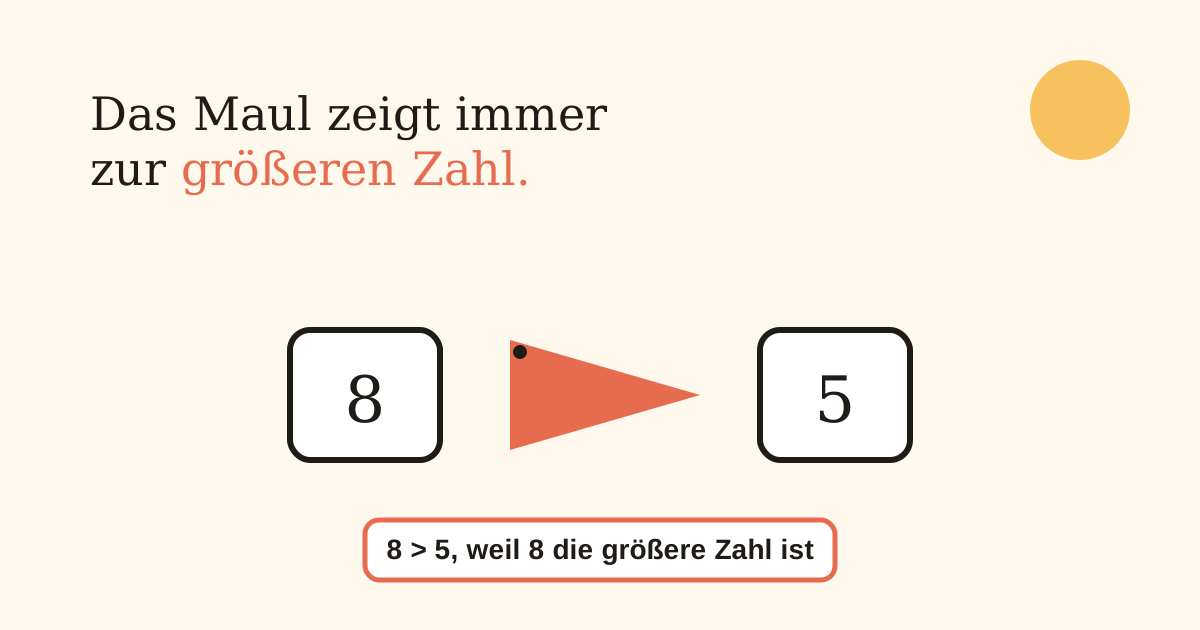
Greater-than and less-than signs: why the crocodile eats the wrong number
< and > look like mirror images of each other, and that's exactly what trips up children in grade 1. The crocodile mnemonic helps — but only once the direction actually sticks. How to make it permanent.
Read more →
6 August 2026 · 4 min read
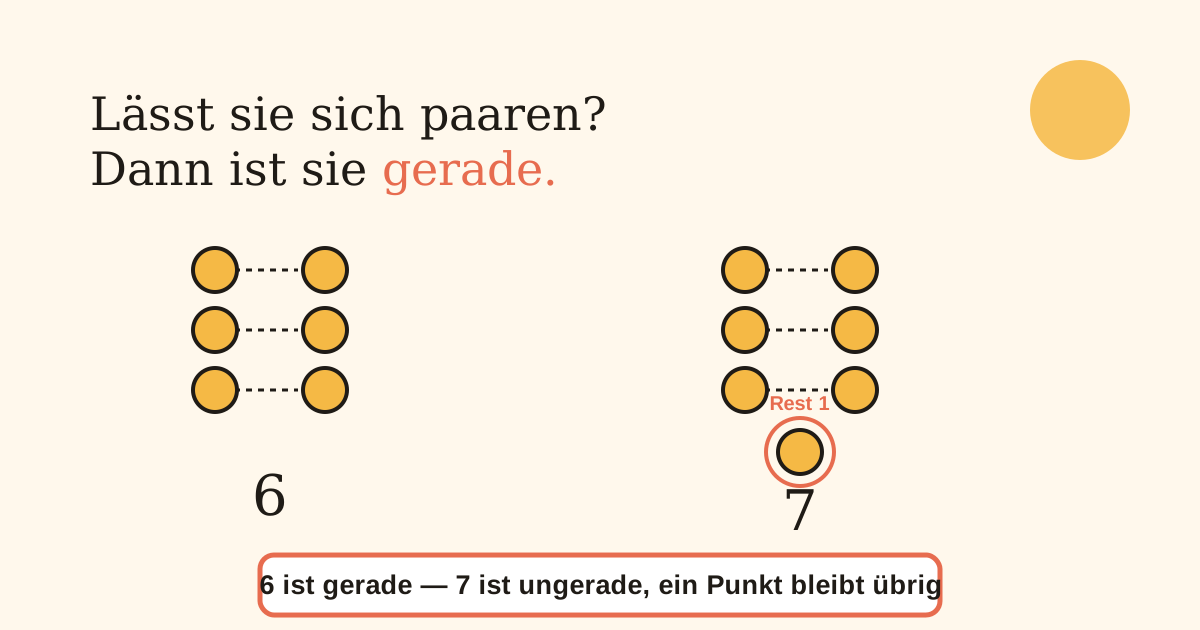
Even and odd numbers: why one dot is left standing alone
Even or odd isn't about how big a number is — it's about whether pairing it up leaves one dot standing alone. Why checking the last digit should come after the understanding, not instead of it.
Read more →
6 August 2026 · 4 min read
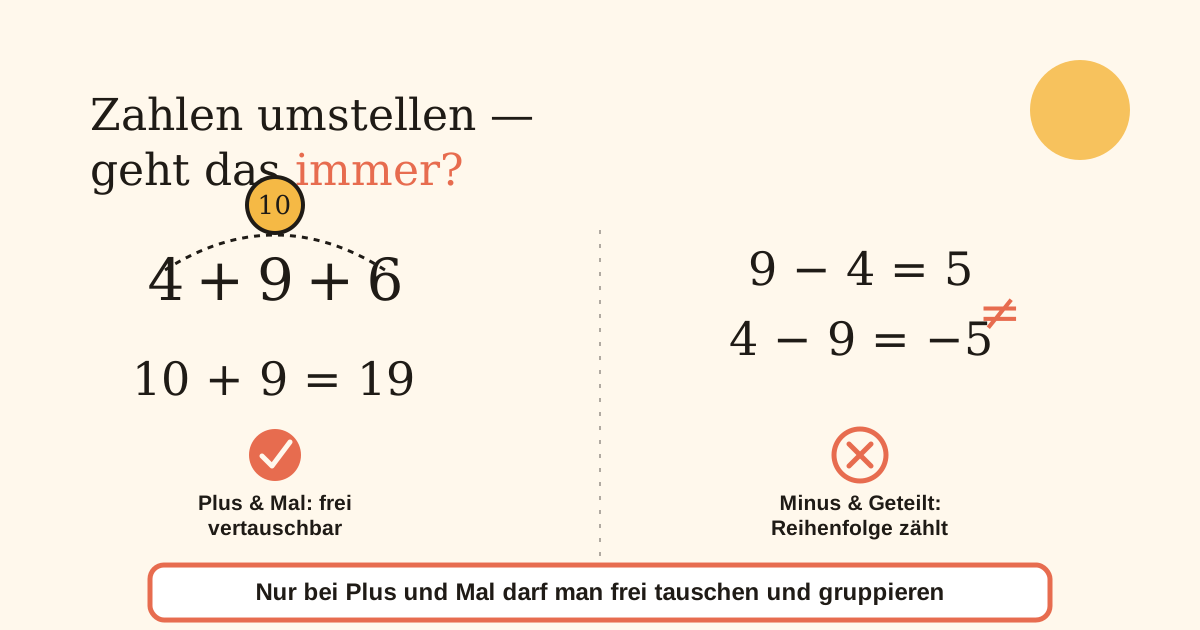
Using number tricks the smart way: why order doesn't matter for addition — but does for subtraction
With 4 + 9 + 6 it pays to add 4 and 6 first. With 9 − 4, swapping to 4 − 9 doesn't work. Why addition and multiplication allow reordering, subtraction and division don't — and how children learn to spot the difference reliably.
Read more →
5 August 2026 · 6 min read
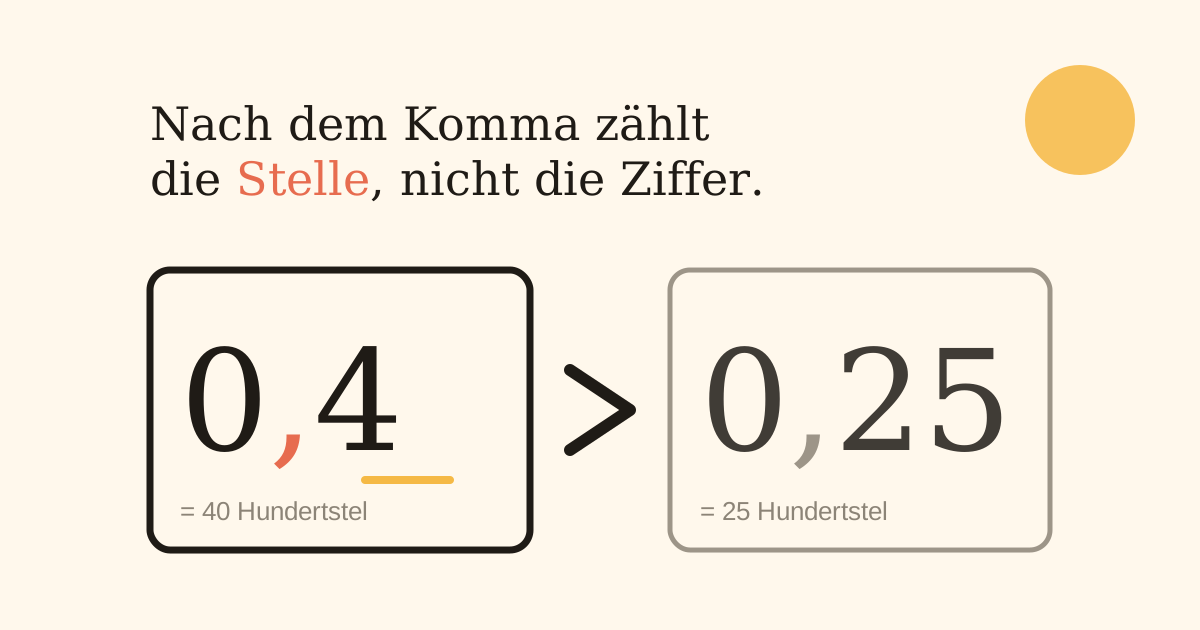
Decimals: why 0.4 is bigger than 0.25
The classic stumbling block when decimals first show up: children compare the digits after the point as if they were a whole number. Where the mistake comes from — and how it clears up in minutes.
Read more →
5 August 2026 · 6 min read
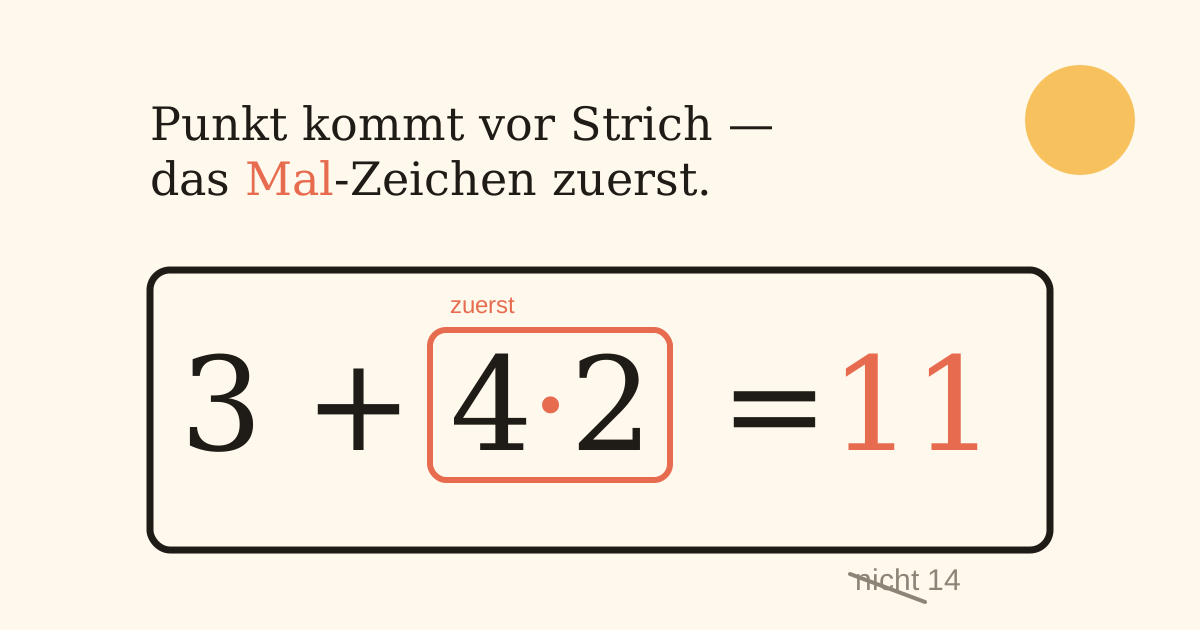
Order of operations: why 3 + 4 × 2 isn't 14
3 + 4 × 2 equals 11, not 14 — the classic stumbling block once addition, subtraction, multiplication and division mix in one problem. Where the mistake comes from and how it clears up in minutes.
Read more →
5 August 2026 · 6 min read
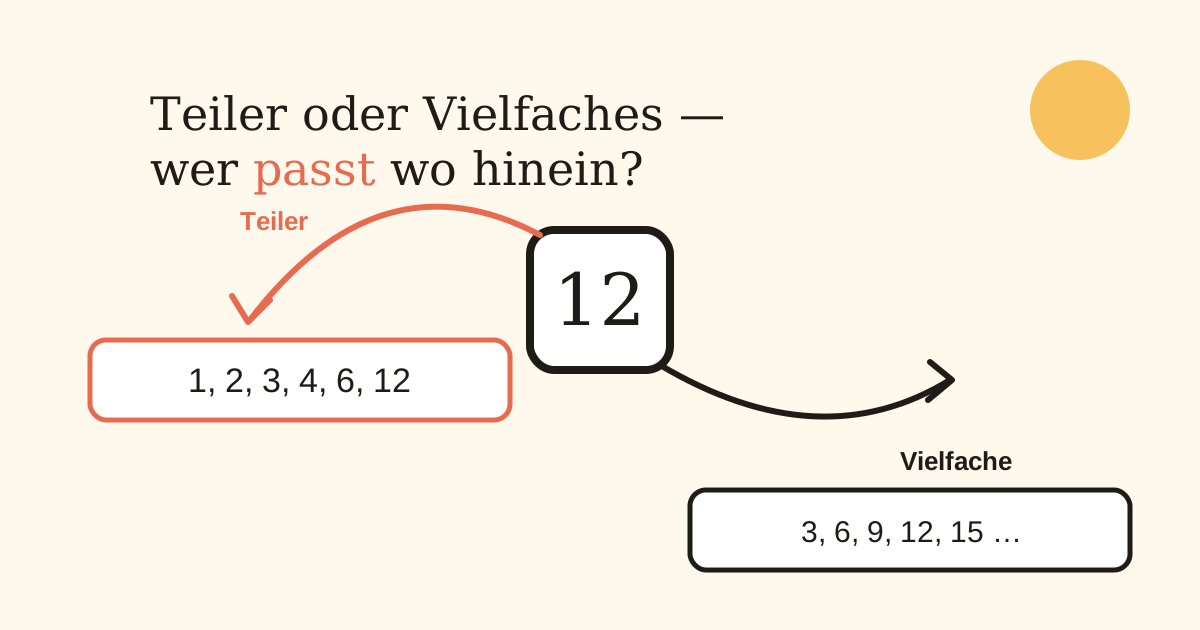
Factors vs. multiples: the mix-up that trips up grade 4
Is 3 a factor of 12, or a multiple of it? Two words from the times table that get swapped constantly once kids reach grade 4 — and how the difference clicks in minutes.
Read more →
5 August 2026 · 6 min read
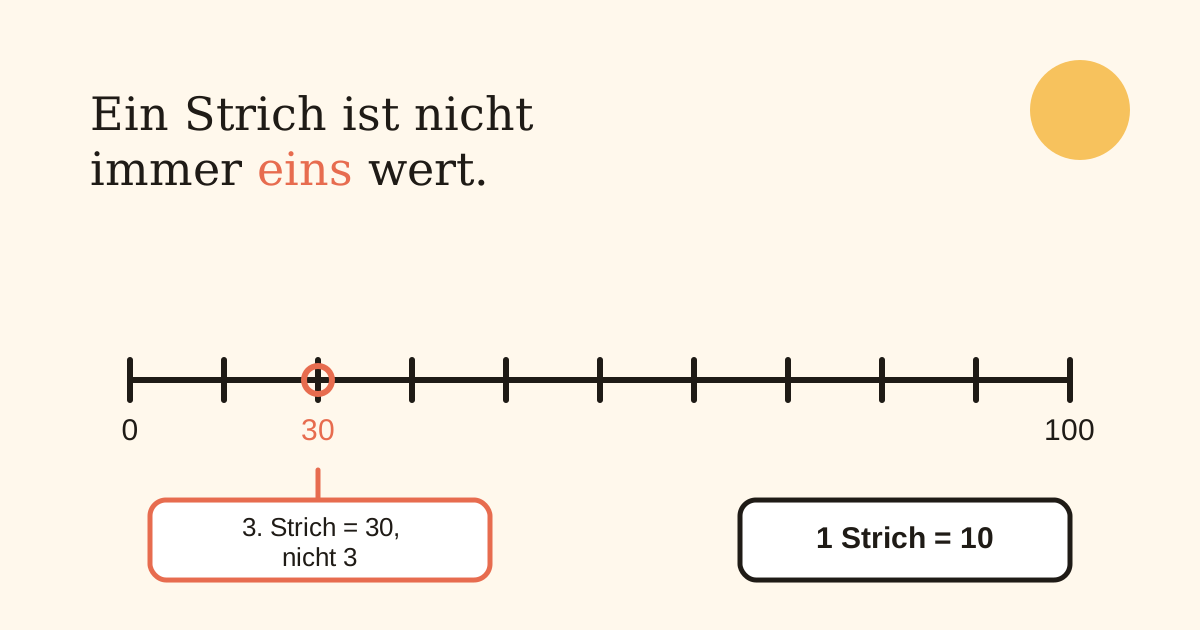
Reading the number line: why one tick doesn't always mean one
On a number line from 0 to 100, one tick mark doesn't automatically stand for one step — it might be worth 2, 5, 10, or more. The mistake that trips kids up when reading a number line, and how it clears up in minutes.
Read more →
4 August 2026 · 6 min read
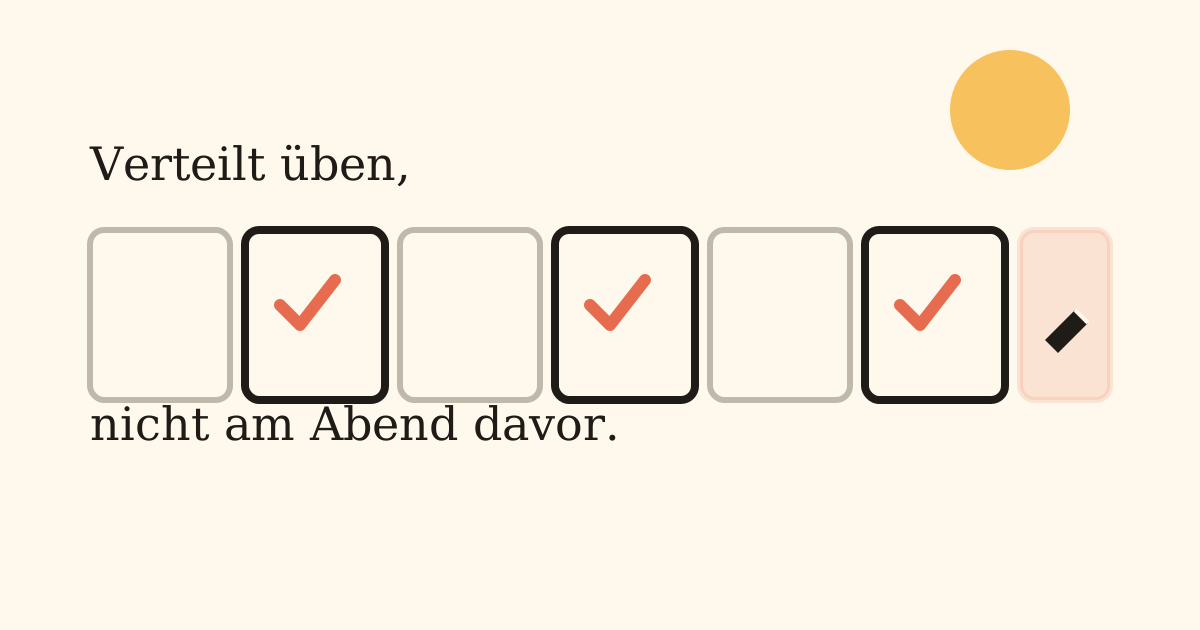
Test announced: how to actually prepare your child for it
"Next week we're writing a math test" — and the tension goes up for plenty of kids (and parents). A schedule that actually works, instead of cramming everything the night before.
Read more →
4 August 2026 · 6 min read
Math tutoring: when is it actually worth it?
One bad test isn't a reason for paid tutoring yet. The signals that actually matter — and what often helps first, before any money changes hands.
Read more →
29 July 2026 · 7 min read
Recognizing dyscalculia: when trouble with numbers is more than a learning gap
Some children struggle with numbers persistently, no matter how much they practise. How to tell a possible dyscalculia apart from an ordinary learning gap — and what steps actually help.
Read more →
29 July 2026 · 6 min read
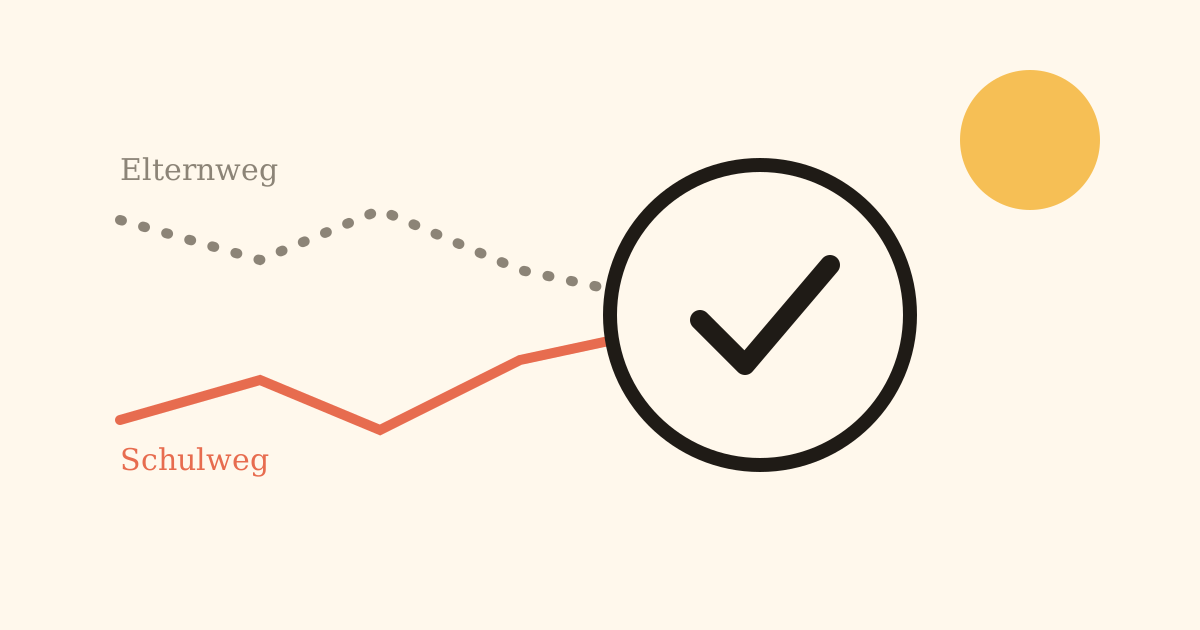
"That's not how we learned it": why the school's method matters
You show your child a subtraction the way you learned it — and they shut down because the teacher explained it differently. Why that happens, and how to help without pitting two methods against each other.
Read more →
28 July 2026 · 6 min read
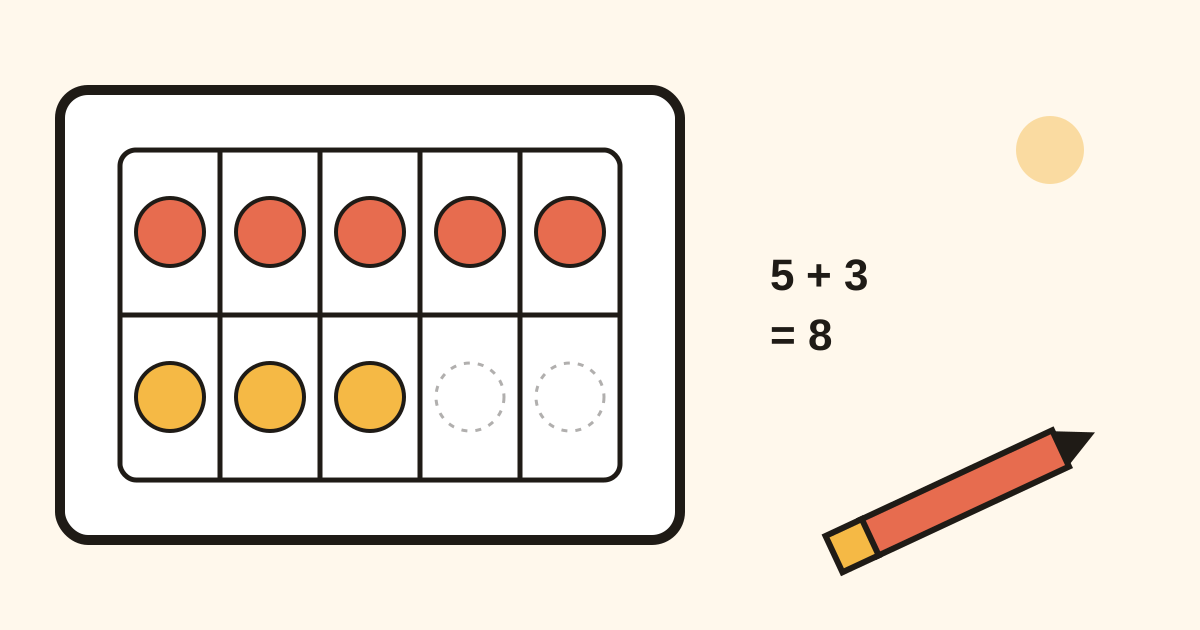
Grade-1 math: what your child should master by summer
Numbers to 20, decomposing numbers, doubling and halving: the core topics of grade 1 at a glance — with simple one-sentence checks for the kitchen table.
Read more →
28 July 2026 · 5 min read
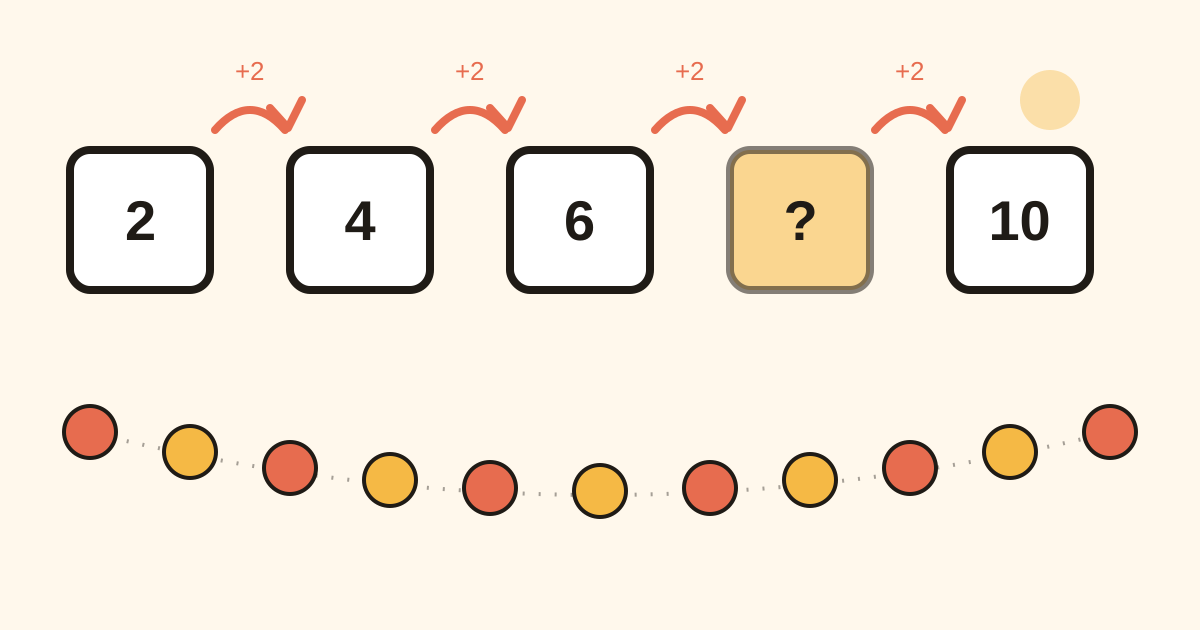
Spotting number patterns: the underrated math skill
Pattern recognition isn't a side topic — it's the skill that later carries algebra, word problems and the times tables. How to practise it at the kitchen table.
Read more →
28 July 2026 · 7 min read
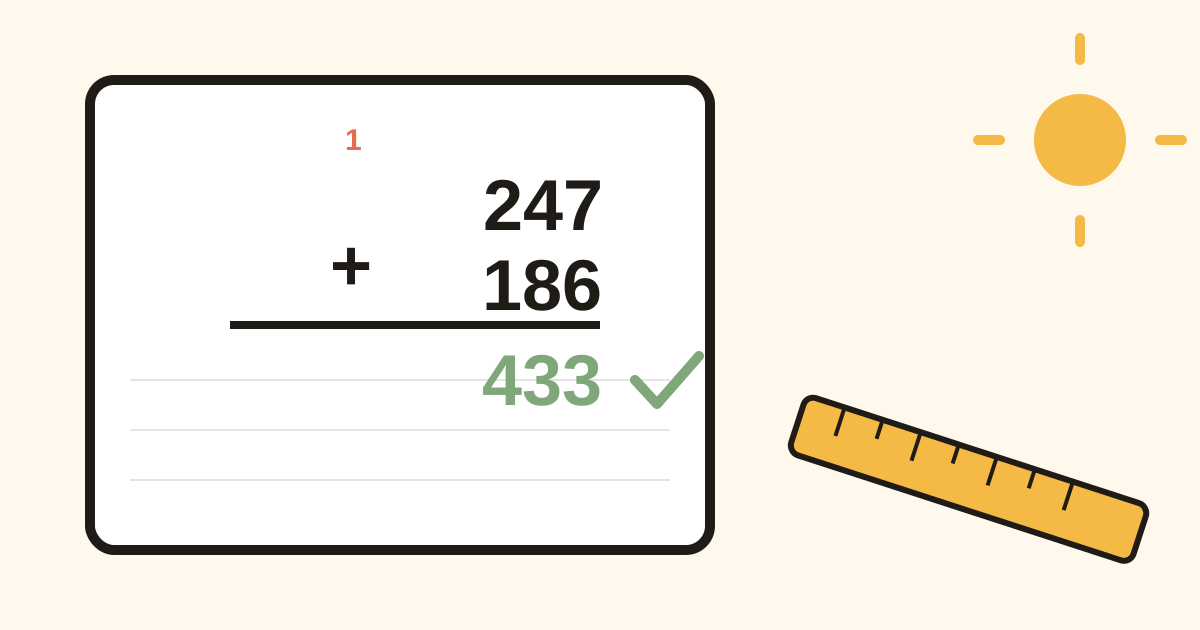
Grade-3 math: what your child should master by summer
Numbers to 1,000, column addition, the complete times tables: the core topics of grade 3 at a glance — with one-sentence checks for the kitchen table.
Read more →

28 July 2026 · 7 min read
Grade-4 math: what your child should master by summer
Numbers to 1 million, column division, expanding and simplifying fractions: the core topics of grade 4 at a glance — with one-sentence checks for the kitchen table.
Read more →

28 July 2026 · 6 min read
Recognizing math anxiety: when it isn't ability that's missing, but calm
Some children freeze not because they can't do the math, but because they're afraid of it. How to tell the two apart — and what actually helps with math anxiety.
Read more →
27 July 2026 · 5 min read
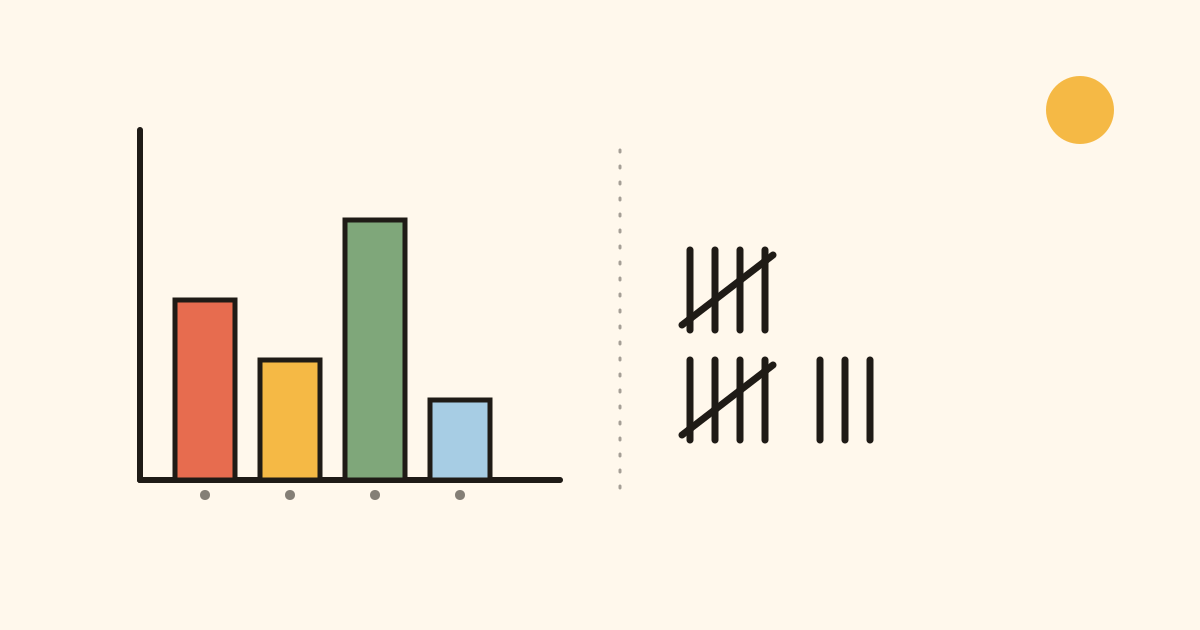
Reading charts and tally lists: the topic many parents overlook
Bar charts, tally lists, and the words "possible, certain, impossible" belong to the data-and-chance strand of the curriculum — and almost never get practised at home. How to teach your child to read a chart.
Read more →
27 July 2026 · 6 min read
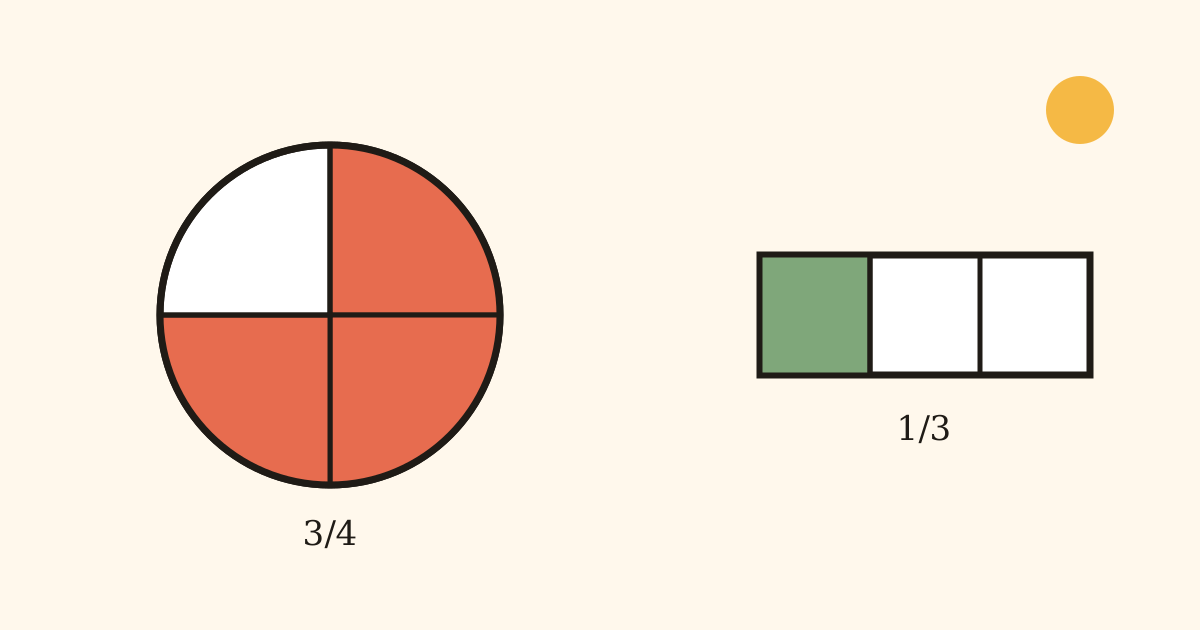
Understanding fractions: the start of a new kind of number
A half, a third, three-quarters: fractions are the first number made up of two numbers. Why that's confusing at first for primary-school kids — and how the introduction can click.
Read more →

27 July 2026 · 6 min read
Shapes and symmetry: space and geometry in primary school
Cubes, cuboids, spheres — and how to tell whether a shape is truly symmetric. Space and shape is the quiet curriculum area next to arithmetic. How to practise it with everyday objects.
Read more →
27 July 2026 · 7 min read
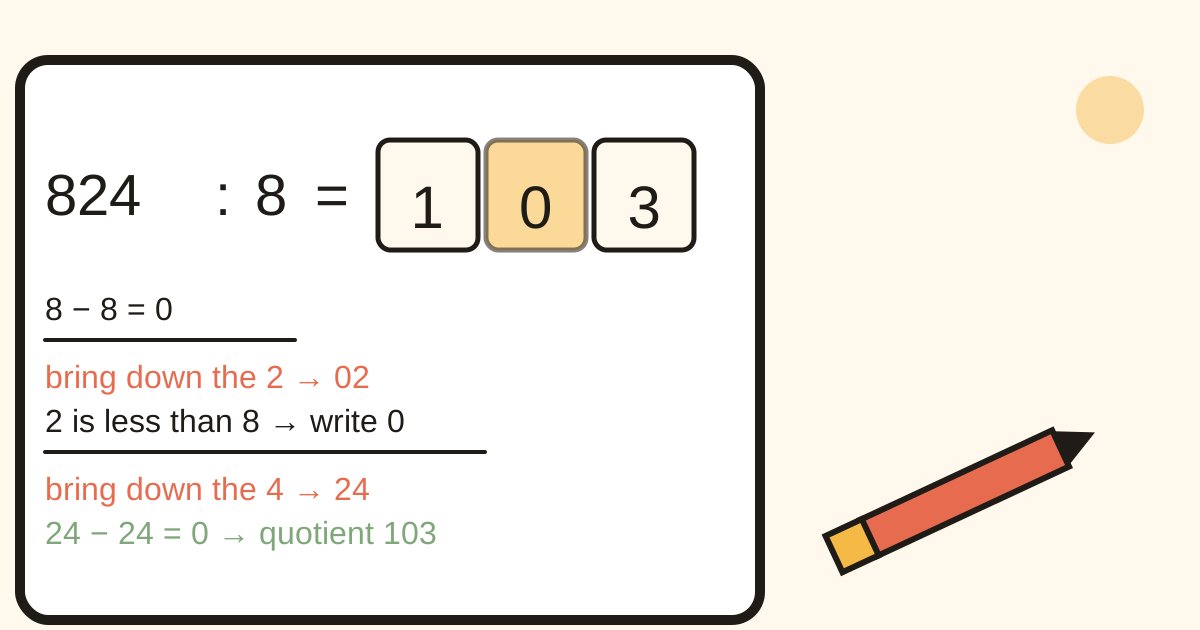
Long division: the last of the four written methods
After addition, subtraction and multiplication, grade 4 adds long division — and with it the zeros that quietly vanish from the quotient. How to explain the method step by step.
Read more →
27 July 2026 · 6 min read
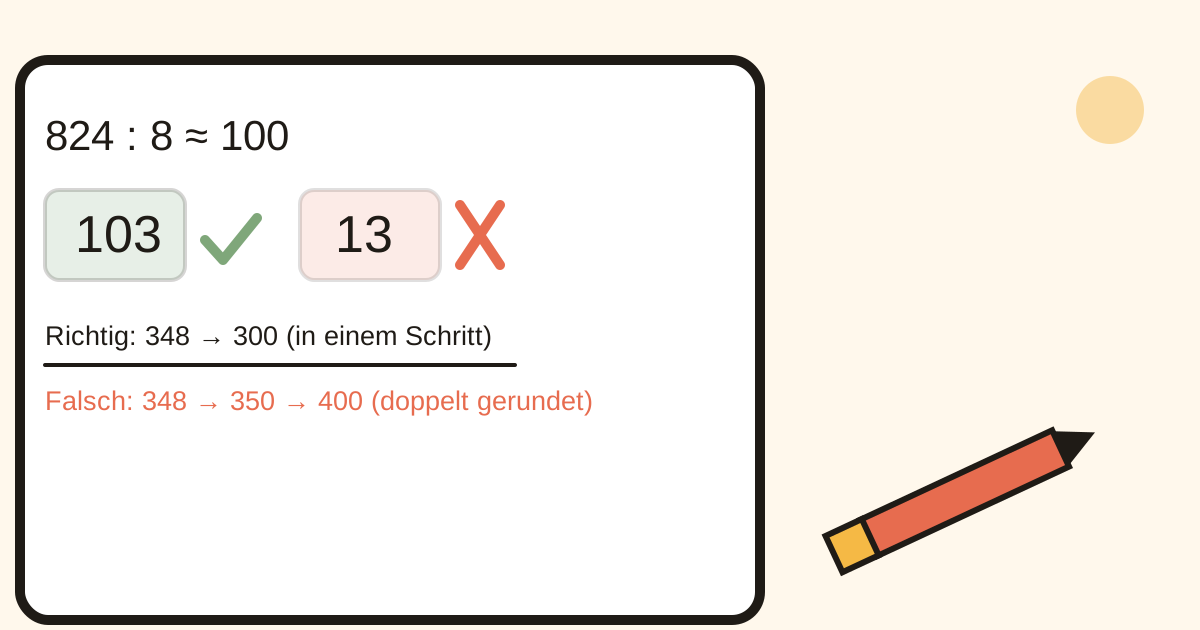
Estimating and rounding: how your child catches their own mistakes
Rounding to the nearest ten or hundred sounds like a side note — but estimating is the one check a child can run on their own answer before the mistake ever reaches the exercise book.
Read more →
27 July 2026 · 6 min read
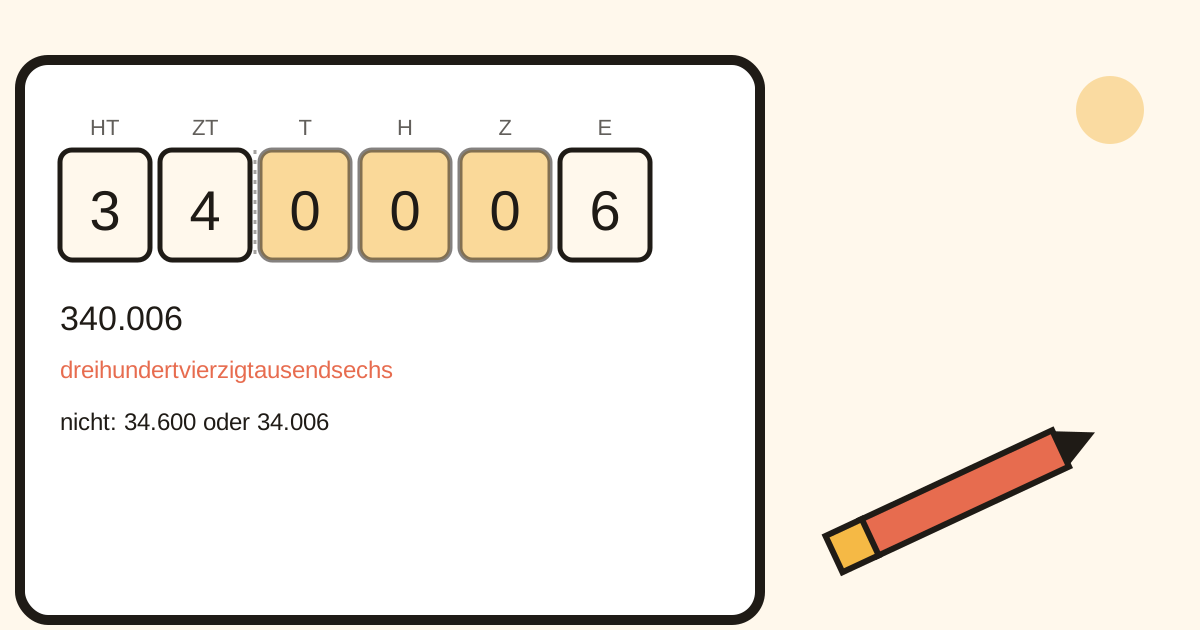
Reading and writing large numbers: place value up to a million
From grade 3 onward, numbers grow fast past the thousand mark. Without solid place-value understanding, 40,006 and 4,600 are easy to mix up. Here's how the bigger number range becomes concrete.
Read more →
26 July 2026 · 6 min read
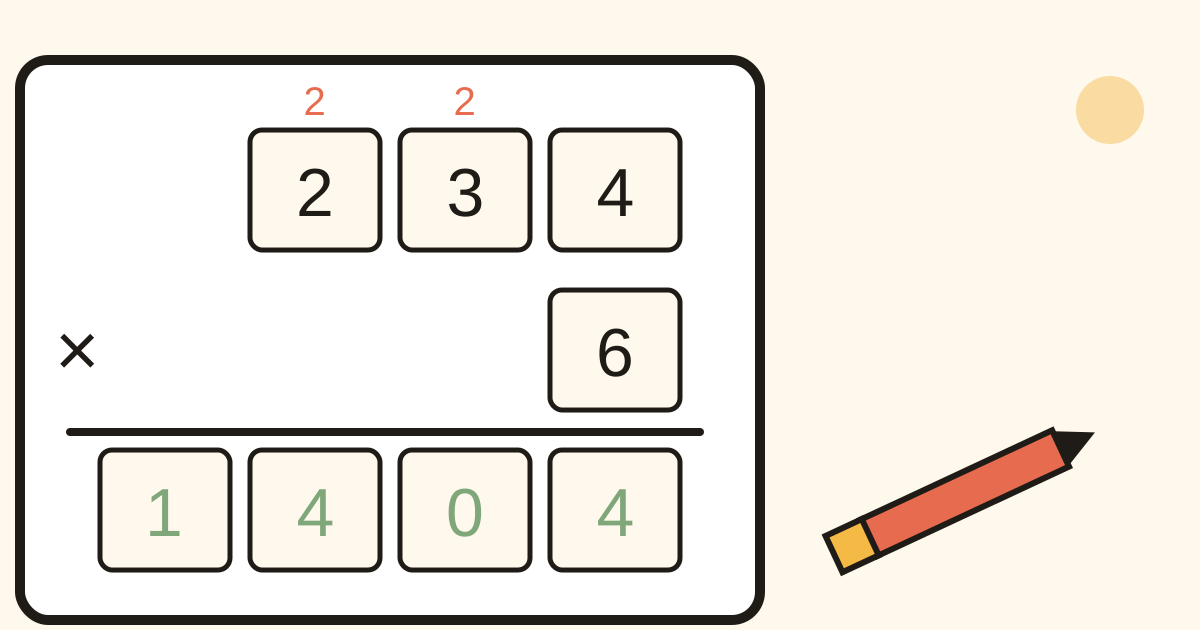
Column multiplication: how the written method for big numbers finally clicks
Column multiplication arrives in year 4 and brings a new kind of mistake: digits drift out of place, carries get lost. How the algorithm becomes a method your child actually understands, not a memorised scheme.
Read more →
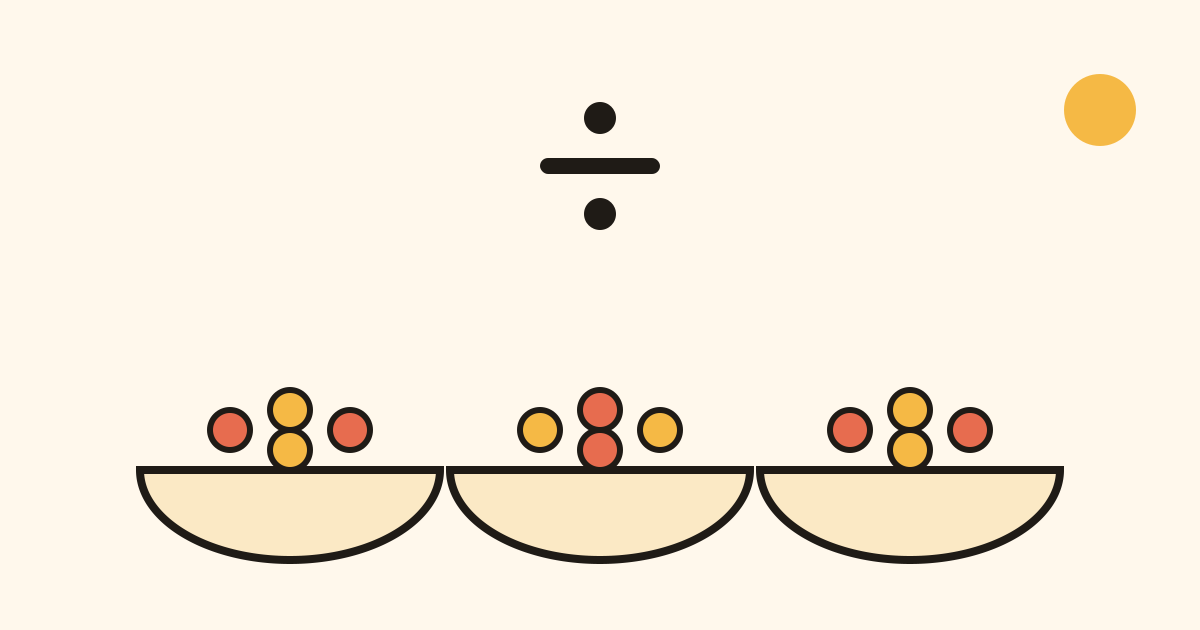
24 July 2026 · 6 min read
Learning division: how it actually works in primary school
Division follows the times tables and becomes the second big hurdle for many children. Why sharing and grouping need two different mental pictures — and how division with remainders finally clicks.
Read more →
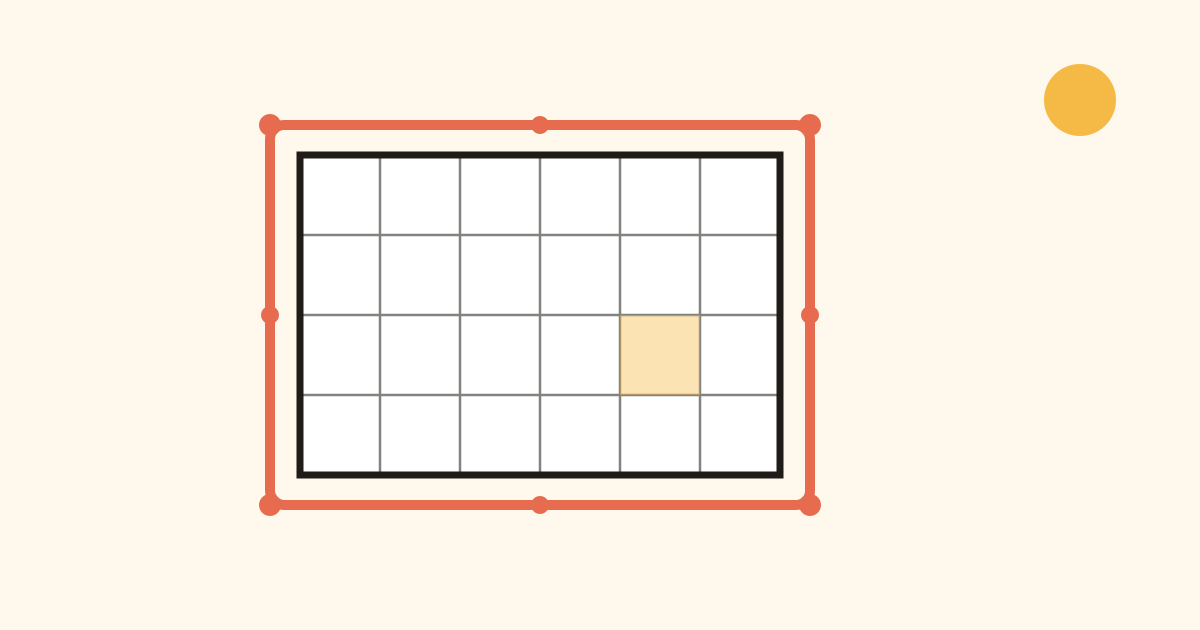
24 July 2026 · 6 min read
Area and perimeter: how your child actually tells them apart
Same rectangle, same two numbers, two completely different questions: perimeter and area get mixed up constantly. How to keep them apart — with a garden fence and square-counting, not just formulas.
Read more →
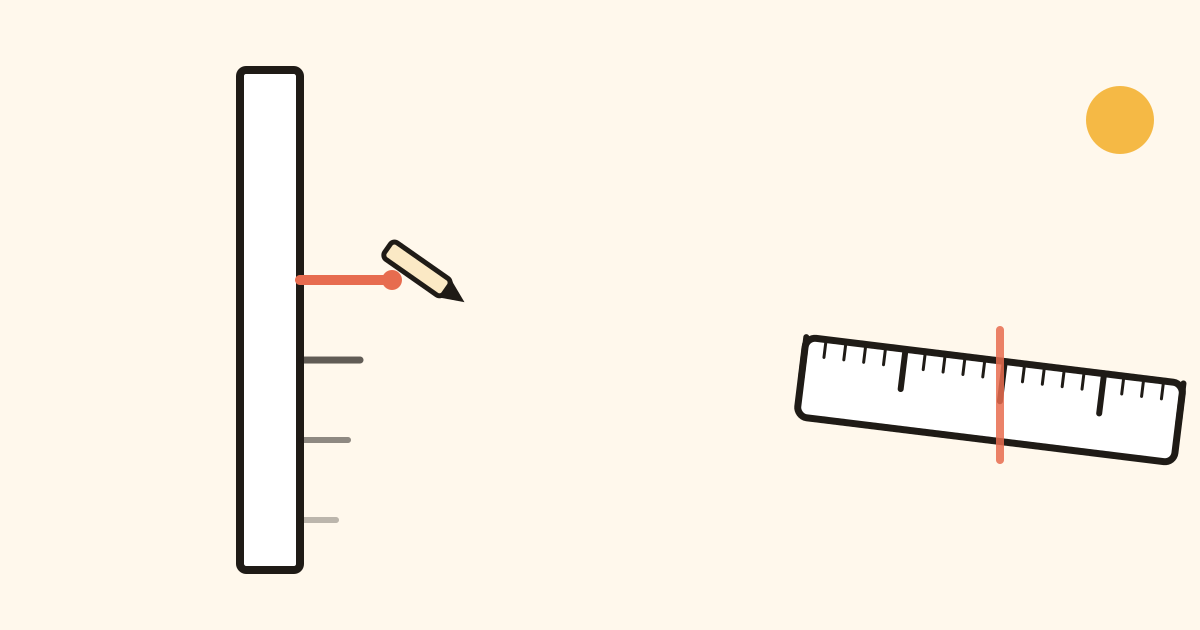
23 July 2026 · 5 min read
Estimating and measuring length: cm and m in grade 2
Is the tabletop roughly 70 centimetres wide, or 70 metres? Why judging scale is harder than measuring itself — and how everyday objects become the yardstick.
Read more →
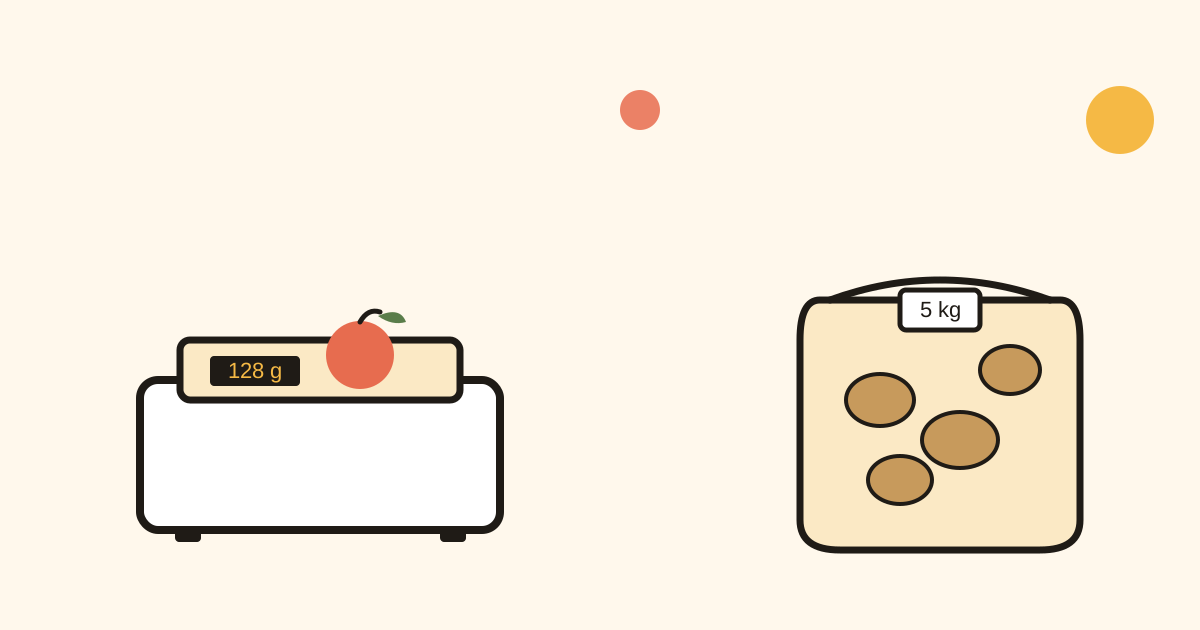
23 July 2026 · 5 min read
Estimating and weighing: kg and g in grade 2
Does an apple weigh roughly 150 grams, or 150 kilograms? How children build a feel for weight — with the kitchen scale as the best teaching tool already in the house.
Read more →

23 July 2026 · 5 min read
Estimating and measuring capacity: litres and millilitres in primary school
Does a litre of milk fit in a drinking glass? How children build a feel for litres and millilitres — with the kitchen measuring cup as the best teaching tool already in the house.
Read more →
23 July 2026 · 5 min read
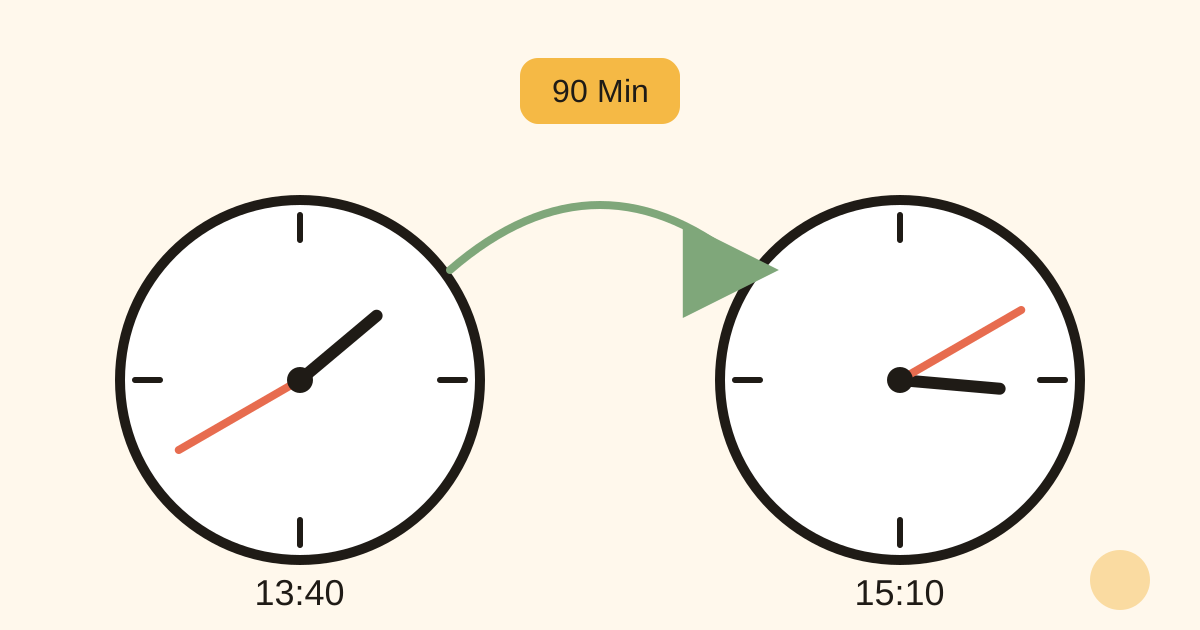
Calculating time spans: how long is it really?
Reading the clock is one skill — working out how much time lies between 1:40pm and 3:10pm is another. Why time spans trip kids up, and the method that actually works.
Read more →
23 July 2026 · 6 min read
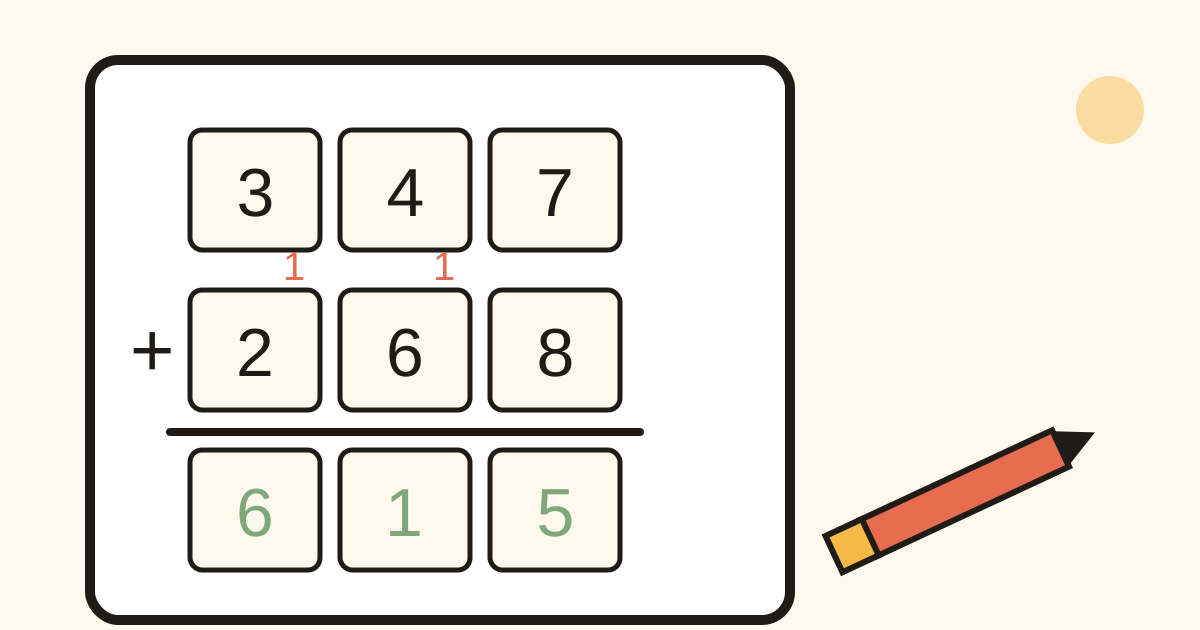
Column addition and subtraction: carrying, explained simply
Grade 3 brings column arithmetic — and with it, carrying. Why this method works differently from mental math, and how to explain it correctly at home.
Read more →
21 July 2026 · 6 min read
Telling time: how kids learn to read an analog clock
Digital clocks are everywhere in a child's day — yet reading an analog clock is still required in school. A step-by-step order that makes it click without frustration.
Read more →
21 July 2026 · 5 min read
Money math: how making change becomes the best kind of practice
Money is the one curriculum topic children hold in their hands every day. How to use coins and change-making to reinforce crossing ten and place value.
Read more →
20 July 2026 · 6 min read
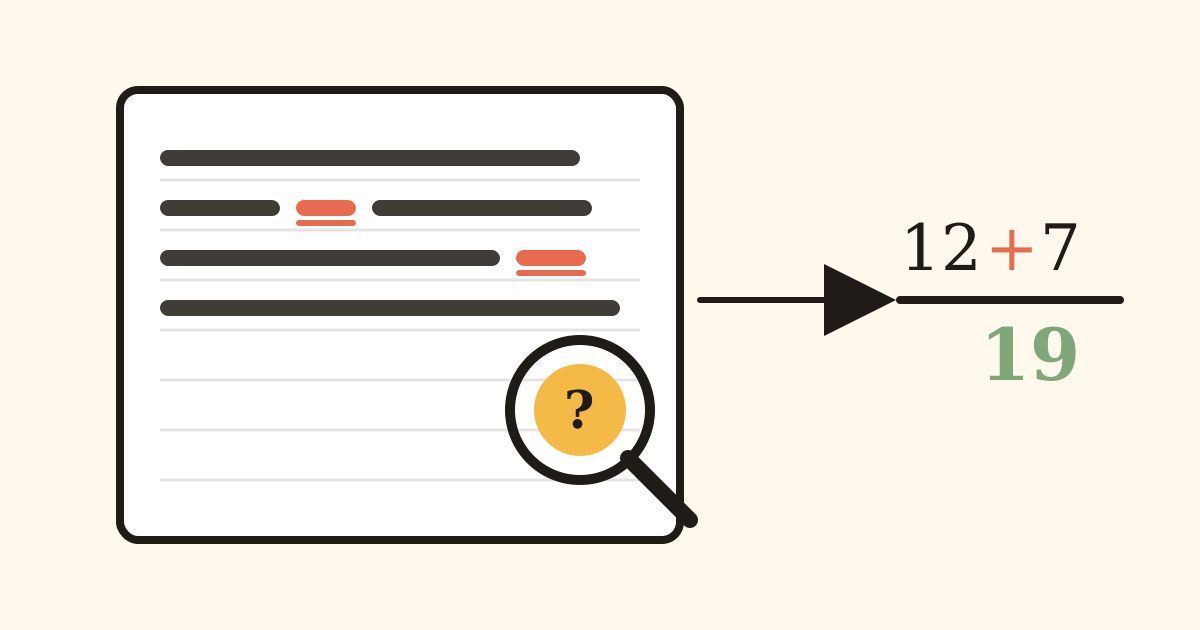
Word problems: why your child struggles with reading, not arithmetic
12 + 7 works fine, but the word problem built on it is a mystery? It's usually not about the math. A four-step method that makes word problems click.
Read more →

20 July 2026 · 5 min read
Avoiding the summer math slide: 10 minutes is enough
Six weeks off cost more arithmetic fluency than most parents expect. How to prevent September from starting at zero, with minimal effort.
Read more →
14 July 2026 · 6 min read
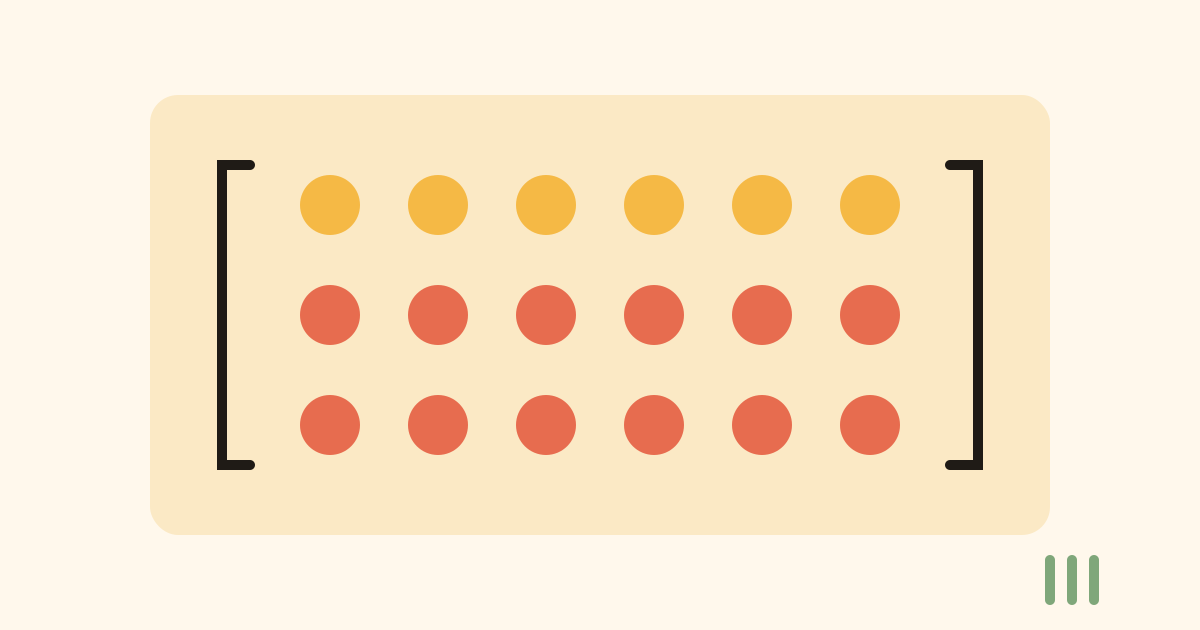
Times tables: the 10-minute plan that actually works
Short daily sessions beat long weekend marathons. How to build times-table fluency in ten minutes a day — table by table, without tears.
Read more →
14 July 2026 · 5 min read
Why paper beats apps: what research says about handwriting and math
Learning apps promise a lot. But for learning arithmetic, research points firmly at pencil and paper — with a clearly limited role for the screen.
Read more →

14 July 2026 · 7 min read
Grade-2 math: what your child should master by summer
Numbers to 100, crossing ten, times tables: the core topics of grade 2 at a glance — with simple one-sentence checks for the kitchen table.
Read more →
14 July 2026 · 6 min read
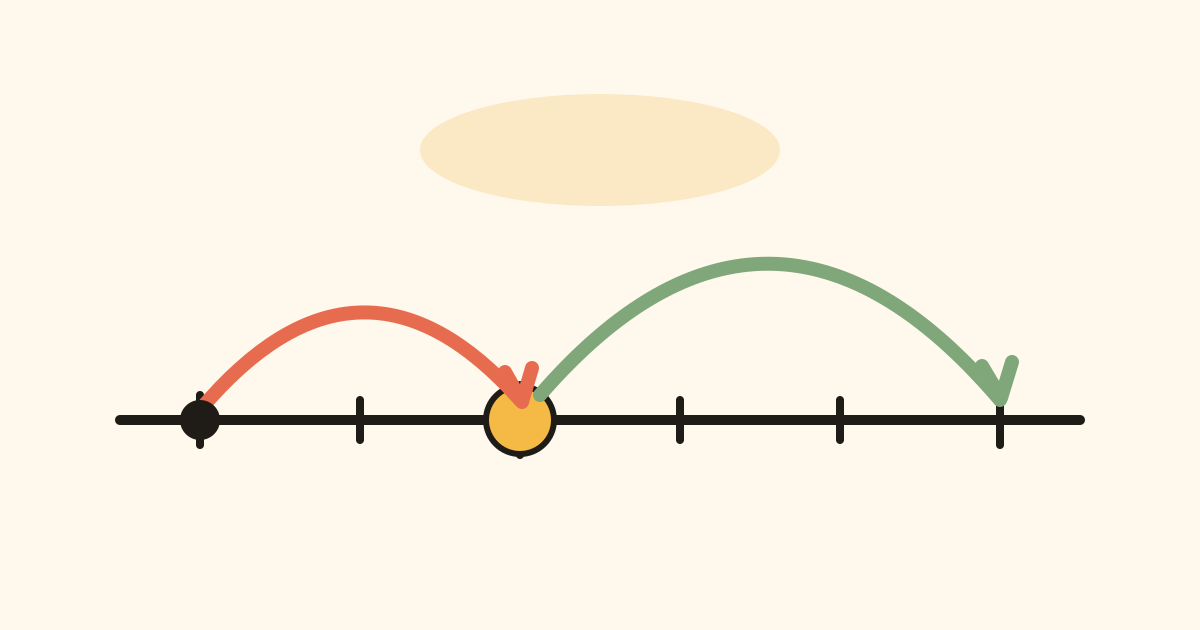
Crossing ten: how to explain carrying and borrowing
37 + 25 is hard, 32 + 25 isn't — the difference is the tens boundary. How to explain it step by step, without clashing school and parent methods.
Read more →
14 July 2026 · 5 min read
Screen time with purpose: how much app is okay for learning?
Not all screen minutes are equal. An honest framework for families who want to use learning apps without blowing their child's attention budget.
Read more →
14 July 2026 · 5 min read
How fast should my child calculate? What response times reveal
Right or wrong is only half the truth. The time to answer reveals whether a child recalls facts or still computes — and what to practise next.
Read more →