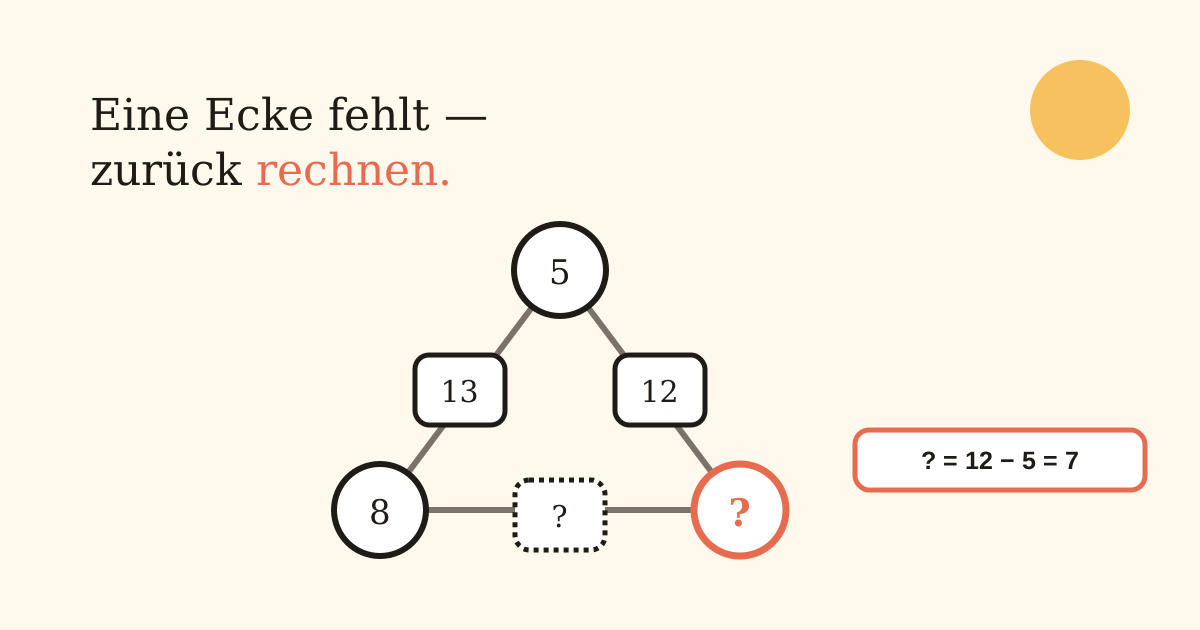
Three circles, three boxes in between, a single rule — a number triangle looks like a puzzle at first glance, but underneath it applies the same calculation logic every time: each box between two corner numbers shows their sum. When all three corners are given, the task is pure addition, something children handle confidently by grade 1 or 2. It gets harder once a corner is missing and a box is known instead — that's exactly the point where it shows whether a child truly understands the principle or only manages the easy direction.
The rule in one sentence
Each box on a side of the triangle is the sum of the two corner numbers it sits between. If two corners are known, the box follows by addition. But if a corner is unknown while the box and the other corner are known, the known corner gets subtracted from the box — the same reversal used in any fact family.
An example makes it concrete: corners 5 and 8 give a box of 13 between them. If a corner is missing instead of the 8, and only the 5 and the box 13 are known, then 13 − 5 = 8 — the missing corner.
Where the mistake comes from
Switching between working forward and working backward is almost always the source of the mistake here — not the individual addition or subtraction by itself.
- A child keeps adding even though a corner is missing, because "number triangle" gets equated with "work out the box", regardless of what's actually given.
- When working backwards, the wrong number gets subtracted from the other — the box from the corner instead of the other way round — producing a negative or reversed result.
- A box gets confused with a corner, because both are shown as a number in a shape and the difference — a corner belongs to two sides at once, a box only to one — isn't held in mind.
- When several numbers are missing in the same triangle, a child guesses wildly instead of first finding the one corner that a known box and a known corner pin down exactly.
What your child can already build on
A number triangle doesn't need new knowledge — just applying a familiar principle to a new shape. A child who already solves number walls has practised the core idea already: a known sum and a known number give the missing number by subtraction, exactly like a missing bottom brick in a wall. Fact families help directly too — knowing that 5 + 8 = 13 automatically comes with 13 − 8 = 5 and 13 − 5 = 8 means the right reversal for any number triangle is already in hand.
The only difference from a number wall is the shape: in a triangle, each corner belongs to two boxes at once, not just one — that makes it a little more demanding, but changes nothing about the underlying calculation.
How to practise this at home in 10 minutes
A few drills that need no worksheet:
- Have your child work out a simple triangle with all three corners known, then replace one corner with a question mark and have them work backwards from the two boxes next to it.
- Draw a triangle together from three everyday numbers (ages, a house number), work out the three boxes, then cover one corner and have your child work it back out.
- After solving each corner, say the reversal out loud: "if 13 − 5 = 8, what's 5 + 8?" — turning the check-back into a habit.
- For confident children: show a triangle where only the three boxes are known and no corner at all — a genuine brain-teaser where trial and correction is allowed, and even the point.
What Talentists does differently
Our grade 2–3 worksheets introduce number triangles step by step: first with all three corners known, then with one corner missing and the box given, and only later with the trickier puzzle variants for children moving faster. A five-minute assessment shows whether your child already switches confidently between working forward and working backward, and the worksheet starts exactly there.