After length, weight is grade 2's second big measurement topic, and it follows the same pattern: the actual weighing is learned quickly — read the number, done. The real thinking happens before that, in judging whether something is more likely grams or kilograms.
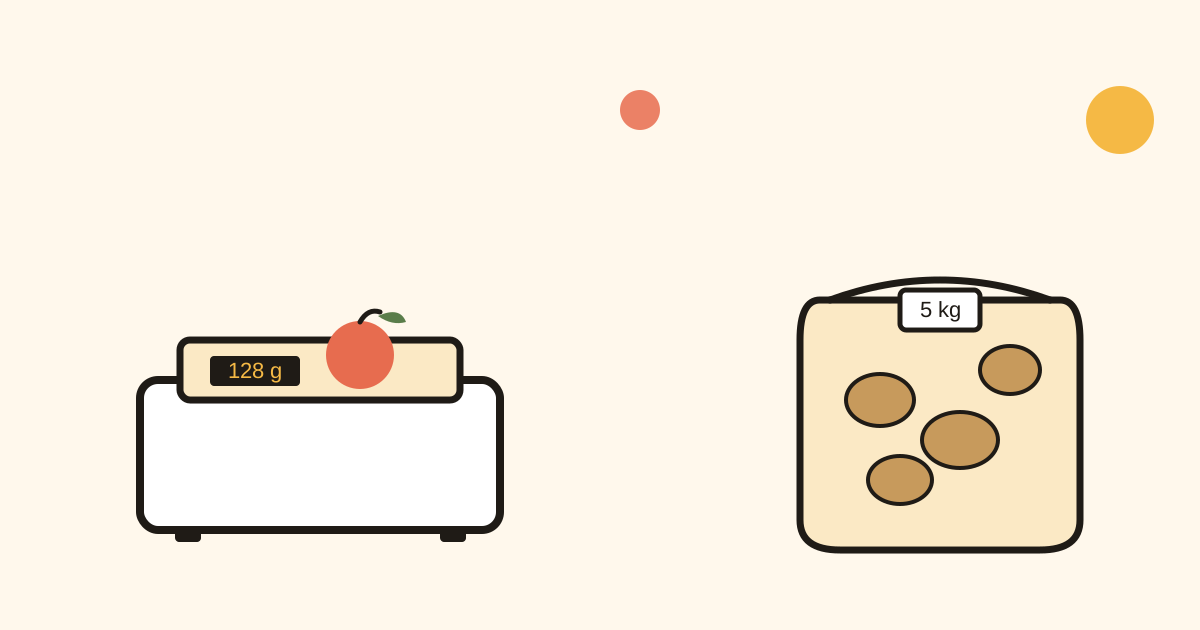
This is where a device sitting in almost every kitchen, rarely seen as a learning tool, earns its keep: the kitchen scale. It gives instant, honest feedback — no explanation, no opinion, just a number.
Hold it first, weigh it second
As with length, the curriculum's order pays off at home too: start with direct comparison by hand. Lift two objects and guess which is heavier — an apple and a potato, a book and an eraser. No number yet, just a judgement.
Only after that does the scale come in, and with it the units grams and kilograms. What matters: the child should weigh and read the display themselves, not just watch. The kitchen scale turns an abstract unit into a tool you operate.
g or kg? The anchor trick
As with centimetres and metres, the question “grams or kilograms?” isn't solved by memorising a rule but by a handful of fixed reference weights that let any new figure be placed immediately.
For grams, sweets work well: a bar of chocolate weighs about 100 grams, a slice of bread around 30 grams, an egg roughly 60 grams. For kilograms, the school bag helps: a fully packed backpack often comes to 3 to 5 kilograms, a bag of potatoes usually 2.5 or 5 kilograms. Anyone who knows an egg weighs about 60 grams spots instantly that “a dog weighing 5 grams” can't be right — before even doing the sum.
The most common mistake: mixing up size and weight
One misconception shows up again and again: big means heavy, small means light. An inflated balloon looks big and weighs almost nothing; a small stone from the garden can be surprisingly heavy. Counter-examples like these are worth using because they visibly disprove the misconception rather than just naming it.
A second trap waits at writing it down: “1 kilogram 200 grams” often gets written as “1.2 kg” or plain “1200” with no unit, when “1.2 kg” or “1200 g” are correct. As with money and length, it helps to say it separately first — “one kilo and two hundred grams” — and derive the written form together afterwards.
Three everyday drills with the kitchen scale
Weight can be practised on the side, no worksheet needed:
- The estimate bet: guess before weighing (“how heavy do you think the banana is?”), then put it on the scale and talk through the gap.
- The backpack check: weigh the packed school bag and compare with yesterday — where did the extra weight come from?
- The recipe: let your child weigh out flour and sugar themselves while baking together. Recipes give real numbers with a real purpose, not invented practice problems.
Weight, like length, never leaves the kitchen table — the scale is usually already in the drawer. Reaching for it regularly hands your child exactly the feel for scale that later makes the difference in word problems involving weight.