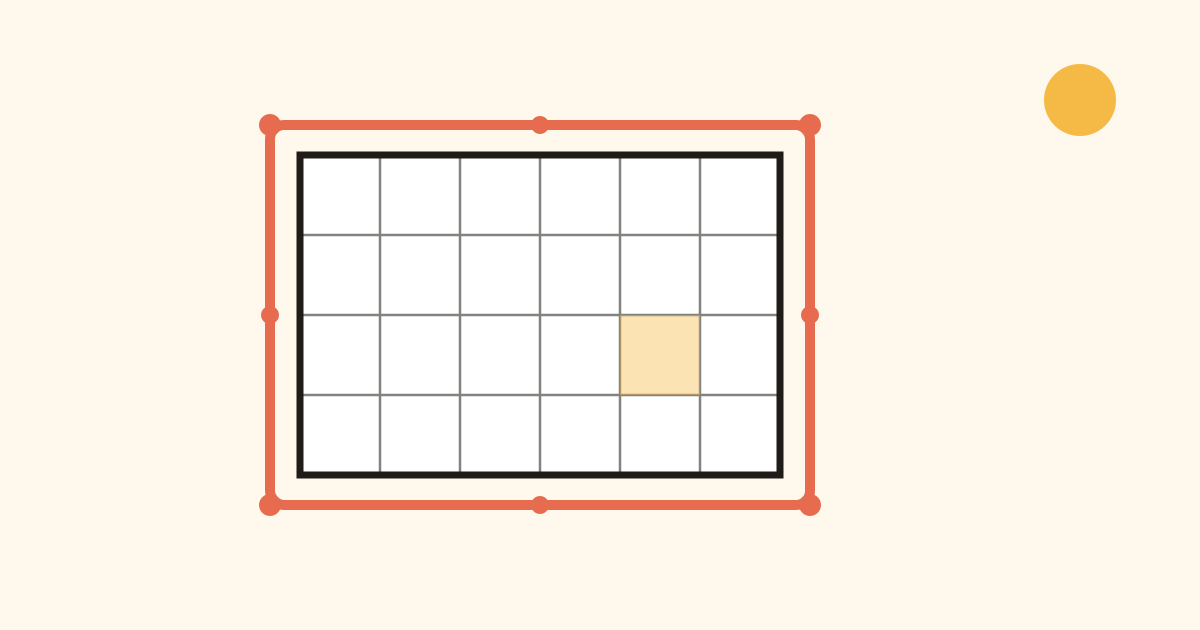
A rectangle, four by six squares. “What's the perimeter?” asks the worksheet, and plenty of children calculate the area first — or the other way round. The two questions sound alike but mean something completely different: perimeter is the walk once around the edge, area is what fits inside. Learn them only as two formulas, and they'll get swapped again the very next time.
The good news: both ideas can be handled with hands before they're calculated — and doing it in that order is exactly what keeps them apart afterwards.
Perimeter first: walking once around
Perimeter is easiest to grasp with feet, not a pencil: walk once around the garden table, the mattress, or the classroom, counting the steps along each side. That's exactly what a fence around a plot does — it measures the edge, not what it encloses.
For a rectangle 6 m long and 4 m wide, the perimeter is the sum of all four sides: 6 + 4 + 6 + 4 = 20 metres. The shortcut school introduces afterwards, 2 × (length + width), should only come once your child has walked the edge themselves — otherwise it stays a memorised line with no picture behind it.
Area: how many squares fit inside
Area answers a different question: how much space is there within the boundary? It's best experienced first through real counting — draw a rectangle on squared paper and count every single square inside it by hand. Only once that's been done several times does the shortcut follow: length times width.
For the same rectangle (6 m by 4 m), that comes to 24 square metres — a different number from the perimeter, even though the same two measurements go in. That contrast — same starting numbers, different result, different unit — is the whole point to understand.
The mix-up almost every child makes at some point
The classic: perimeter and area get swapped because both seem to involve “something with length times width”. A good antidote is a rectangle with both values written side by side — 20 m perimeter, 24 m² area — followed by the question: “Which number do you need to buy a fence? Which one to buy turf?” Fencing is sold by the metre, turf by the square metre — everyday life supplies the memory hook for free.
A second, quieter mistake: forgetting a side when adding up the perimeter. Add only two sides (length + width instead of each twice) and you land on exactly half the right number. Walking the edge with a finger on the paper helps here too — tap each of the four sides in turn and count along.
Why m and m² are two different things
The small square symbol in m² isn't a formality — it's the actual heart of the difference: area is measured in squares, length in single stretches. A good image is a sheet of floor tiles: each tile is one square metre (or a fraction of one), and the room's area is simply the number of tiles that fit. Perimeter, by contrast, is the length of the skirting board running all the way round — one single continuous stretch.
Once your child has laid out and counted tiles or floor mats on a real surface, “24 square metres” turns into something concrete instead of a number with a cryptic symbol tacked on.
Three everyday drills at home
Perimeter and area can be practised on the side, no worksheet needed:
- The room check: measure your child's own bedroom with a tape measure, calculate perimeter and area separately, and compare with a sibling's room.
- The garden question: how much fencing does the flower bed need, and how many bulbs fit inside it? Two questions, two calculations, one bed.
- The building-block puzzle: build different rectangles from the same twelve blocks (2×6, 3×4, 1×12) and notice: same area, completely different perimeter.
Area and perimeter stay two formulas as long as they only exist on paper. Once a child has walked once around the garden table and then counted squares on paper, two memorised lines become a distinction they never mix up again.