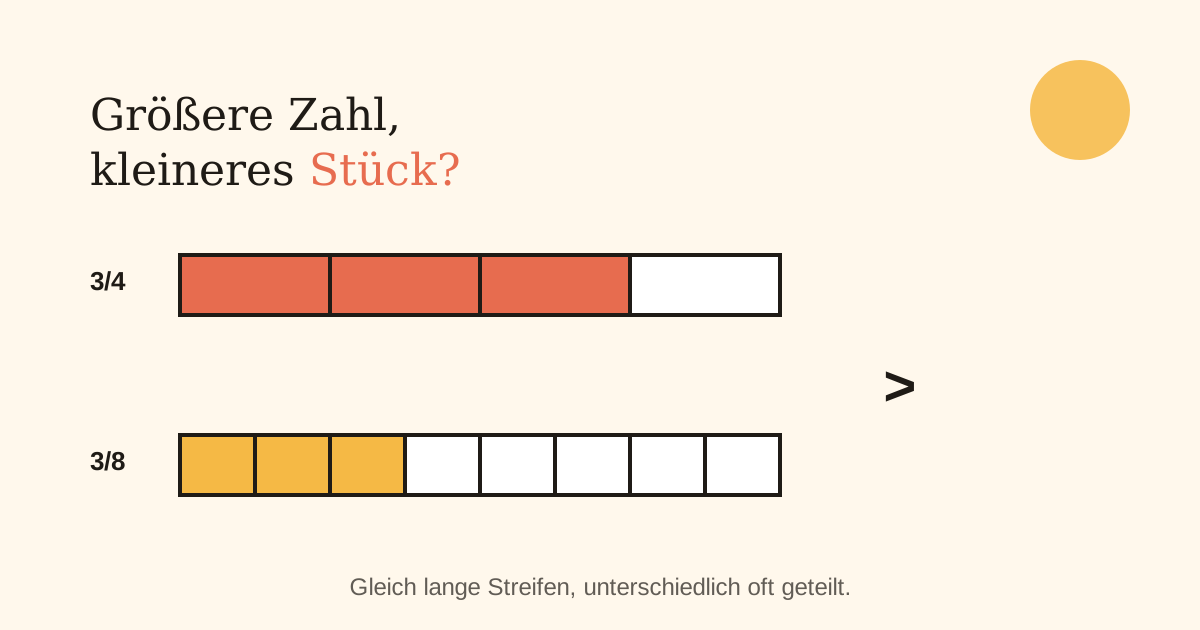
With whole numbers, a simple rule applies: 8 is more than 4. With fractions, that rule sometimes flips — one eighth is smaller than one quarter, even though 8 is bigger than 4. A child who has already folded and simplified fractions already knows why: the more pieces a whole is split into, the smaller each individual piece gets. Now comes the next question — which of two fractions is actually bigger?
Three cases, three strategies
Not every comparison needs the same working. Depending on what two fractions have in common, a different route gets to the answer fastest.
- Same denominator: compare the numerators directly — 5/8 is bigger than 3/8, because with equally sized eighths, five pieces is more than three.
- Same numerator: compare the denominators the other way round — 1/4 is bigger than 1/8, because a whole split into fewer parts gives bigger pieces.
- Neither denominator nor numerator match: find a common denominator first by scaling one fraction or both, then compare the numerators as in the first case — 2/3 becomes 8/12, 3/4 becomes 9/12, so 3/4 is bigger.
Where the mistake comes from
Most mistakes happen because the familiar rule for whole numbers gets carried over to fractions without noticing, instead of looking closely at what's actually being compared.
- The numbers in the denominator get compared like whole numbers — "8 is more than 4, so an eighth is more than a quarter" is true the other way round.
- The numerator and denominator of two different fractions get compared in isolation without finding a common denominator first — 2/3 and 3/5 can't be reliably compared that way.
- When scaling a fraction up, only the denominator gets multiplied by the factor and the numerator gets forgotten — 2/3 wrongly becomes 2/12 instead of 8/12.
- A fraction gets judged as "big" just because the numbers look big, so 7/100 gets taken to be bigger than 1/2.
What your child can already build on
Scaling fractions up and down is the actual tool behind the third case — a child who can already reliably find equivalent fractions only needs to look for a suitable common denominator to make the comparison. And the comparison symbols themselves, greater than, less than, equal to, are already familiar from comparing whole numbers — what's new is only what they're now being applied to.
The folding picture helps too: picturing two paper strips of the same length, one folded into quarters and the other into eighths, shows straight away which single piece is bigger — no calculation needed.
How to practise this at home in 10 minutes
A few drills that need no worksheet:
- Fold two paper strips of equal length a different number of times (say, into quarters and eighths) and lay the individual pieces side by side — which piece is bigger?
- While baking or cooking, compare two measuring cups: is half a cup more or less than a third of a cup?
- Make fraction cards and play a comparison game: flip two cards, name the bigger fraction, connect them with < or >.
- Cut a pizza or cake into different numbers of pieces (real or drawn) and ask: would you rather have 2 out of 4 slices, or 2 out of 8?
What Talentists does differently
Our grade 3–4 worksheets drill all three comparison cases separately and in exactly this order before mixed exercises appear, and open every new task type with a folding picture so the rule gets understood rather than just memorised.