The announcement usually comes about a week ahead, sometimes just a few days: "Next week we're writing a math test." Some children get competitive about it, others get a knot in their stomach — and plenty of parents are left wondering how to help in the time that's left without adding pressure that makes things worse.
The good news: a primary-school math test can be prepared for with modest time and no drama — as long as the preparation is spread across several days instead of squeezed into the night before.
What a primary-school math test actually checks
Primary-school math tests rarely check speed — they check whether your child can apply a method reliably, even under the mild pressure of a test situation. Most tests mix three parts: plain calculation problems (the method currently being taught, e.g. written addition), one or two word problems (the same calculation, hidden inside a short text), and sometimes a geometry or measurement section.
For preparation, that means: don't review everything at random — focus on the one method currently in the spotlight, and don't skip the word problems. In practice they cost the most points, even though the calculation behind them is often simple.
The schedule that actually helps: spread out, not crammed
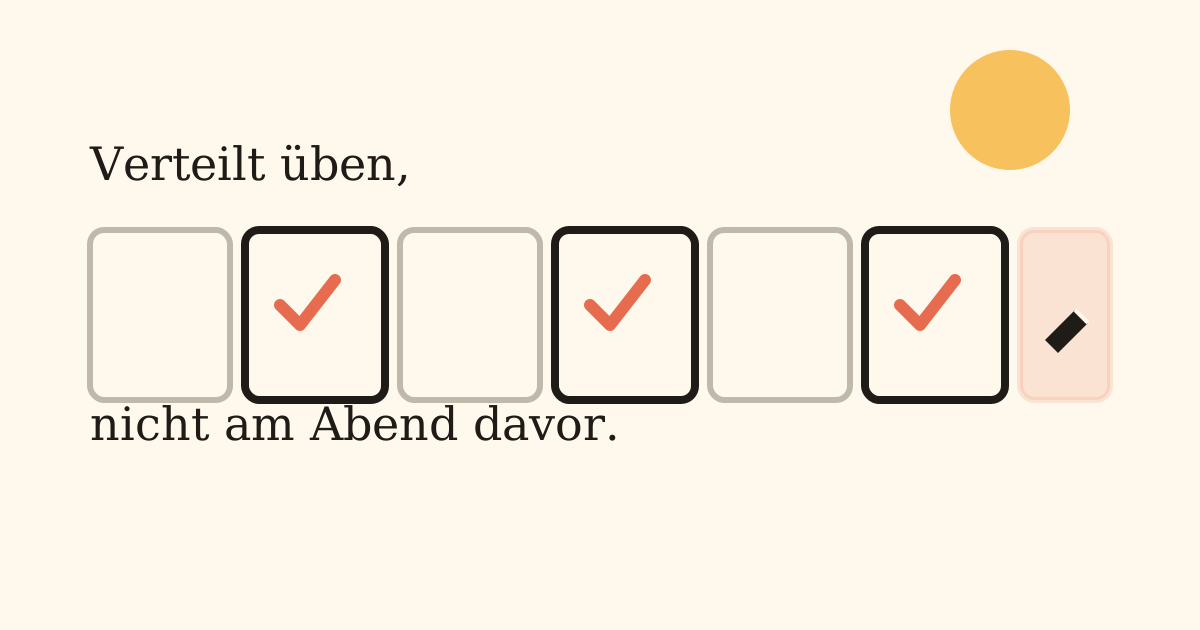
Short, repeated practice sessions stick far better than one long session the night before. A schedule for a week of lead time that's worked well for us:
- 6–7 days out: ask what exactly will be tested, and check the exercise book for the method the class is currently using.
- 4–5 days out: 10–15 minutes practising the current method — problems from the exercise book or an old worksheet work fine.
- 2–3 days out: the same calculation, but wrapped in a word problem — exactly the part that costs the most points later.
- 1 day out: just a short, relaxed review (10 minutes), no new material — at this point, calm matters more than extra content.
The most common preparation mistakes
A handful of patterns show up often in test preparation and weaken its effect:
- Pushing everything to the night before — the brain needs repetition spread over several days, not one long session.
- Only practising problems that already feel solid, because it's reassuring — it's more effective to specifically hunt for the problem types that caused mistakes recently.
- Skipping word problems because "the calculation is obvious anyway" — pulling the calculation out of the text is exactly the part that costs the most time in the actual test.
- Introducing a brand-new topic right before the test "just to be safe" — that usually adds more uncertainty than it removes.
The day before and the day of
Enough sleep affects recall more than one extra practice hour the evening before. On test morning, a normal, calm routine helps more than extra excitement — no "quick, review everything one more time!" over breakfast.
One simple tip you can pass on: read every problem twice before calculating. A single word like "altogether" or "left over" often decides whether to add or subtract — and that's exactly what gets skimmed past on a fast first read.
If the test still doesn't go well
A weaker grade is a snapshot, not a verdict on your child's ability — and, more usefully, very specific information about which problem types still need practice. The most helpful move is looking at the returned test together: not just the grade, but which individual problems didn't work out and why. That's worth more than another round of general practice.
If your child is already showing visible anxiety before the next test, it's worth reading our piece on recognizing math anxiety — test pressure is one of its most common triggers.
What Talentists does differently
Our worksheets are built exactly for these short, spread-out practice sessions: ten minutes on paper, no screen, with help via QR code only for the one problem your child is actually stuck on. That fits easily into the week before a test, alongside homework and everyday life, without turning into an extra screen-based study session.